

Repricing vs Refinancing: How to Optimise Your Existing OCBC Home Loan Rate
You’ve been faithfully paying your mortgage for a few years, and now you’re wondering: “Am I secretly overpaying?” If you’ve got an OCBC home loan, you’ve probably heard two magic words being thrown around – repricing and refinancing. Both promise better deals, lower instalments, and more “optimised” numbers, but they work very differently and are not interchangeable.
The good news is you don’t need to be a finance geek to make a smart choice. You just need to understand what each option really does to your loan, how it affects your wallet over the next three to five years, and how it fits your future plans. This guide will walk you through repricing vs refinancing in plain English, so you know how to make OCBC home loan rates work harder for you, not the other way around.
What Does It Really Mean to “Optimise” Your OCBC Home Loan?
When people say they want to optimise their home loan, what they usually mean is they want to pay less interest without causing themselves unnecessary stress. That doesn’t always mean grabbing the absolute lowest rate on the market because loans come with strings attached – lock-ins, fees, clawbacks and small-print conditions that can quietly bite.
Optimising is about looking at the total cost over a realistic time frame, typically three to five years, not just comparing today’s rates. It’s about matching your loan structure to your life stage, risk tolerance and property plans. A slightly higher rate with a flexible lock-in might be better value than a rock-bottom teaser rate that traps you.
So, when you see new packages and promotions, the real question isn’t just “Is this rate lower?” It’s “Does this move make me better off over the next few years once I factor in fees, penalties, flexibility and my own sanity?” That’s the lens we’ll use for repricing and refinancing.
What Is Repricing Your OCBC Home Loan?
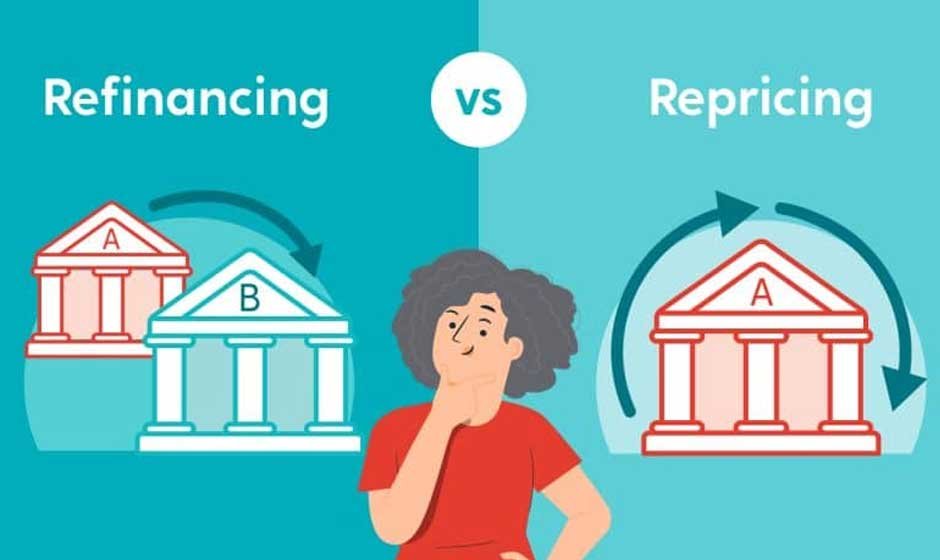
Repricing means staying with OCBC, but switching to a new package or rate structure within the same bank. Think of it as negotiating a new deal with your current partner rather than breaking up and finding someone completely new. Your loan account remains within OCBC; only the terms change.
Repricing is usually simpler and faster than refinancing. There is typically less paperwork, and you don’t go through a full legal process because you’re not changing lenders. You may pay an admin or repricing fee, but you usually avoid the heavier legal costs that come with moving to another bank. This makes repricing attractive if you want a smoother, lower-friction route to a better rate.
However, repricing only gives you access to OCBC’s product menu. If other banks are offering significantly better packages, repricing might not get you the best possible deal. It can still be good value, but you need to compare it against what’s available externally before assuming it’s automatically the winner.
Pros of Repricing with OCBC
Repricing comes with several practical advantages that are easy to overlook when you’re dazzled by external offers. First, it is convenient. You avoid switching GIRO arrangements, you keep your banking relationship under one roof, and you deal with familiar channels. That might not sound glamorous, but it saves time and mental energy.
Second, repricing tends to involve lower upfront costs than refinancing. There is usually no need for new legal documentation, and valuation requirements (if any) are lighter-touch. If your main goal is to improve your rate without spending a lot on fees, repricing often hits a nice sweet spot.
Third, repricing can be especially appealing if your current OCBC package is just slightly out of date rather than wildly uncompetitive. In that case, a decent internal offer may get you 80–90% of the benefit of moving, with 20% of the hassle. For many busy homeowners, that trade-off feels very attractive.
When Repricing Makes Sense
Repricing is usually a good candidate if your lock-in period is over or nearly over, and OCBC is offering you a new package that is reasonably close to what other banks are giving new customers. If the difference in total cost over three to five years isn’t huge, the convenience and lower friction of repricing may outweigh marginal savings from switching banks.
It also makes sense if your income profile or property situation is more complex now than when you first took the loan. If you’ve become self-employed or taken on more debt, getting approved elsewhere could be trickier. In such cases, repricing with OCBC, who already knows your history, might be the smoother route.
On the flip side, if OCBC’s best repricing offer is obviously weaker than what competitors are willing to give you, repricing becomes harder to justify. That’s when refinancing deserves a serious look.
What Is Refinancing to Another Bank?
Refinancing is the bigger move: you switch your home loan from OCBC to another bank entirely. Your new bank grants you a fresh loan, which is used to pay off your existing OCBC loan. From then on, you make repayments to the new bank under the new terms.
Refinancing often offers the widest range of choices because you are not limited to one bank’s menu. Competitors may provide lower rates, better structures, higher subsidies or more attractive “thereafter” pricing after the promotional period. This can be especially appealing after your initial lock-in has ended and you’ve drifted onto a less competitive reversionary rate.
However, refinancing comes with more moving parts. You are likely to incur legal and valuation fees, even if they are partially or fully subsidised. There is more paperwork and a bit more admin to get everything shifted over cleanly. Refinancing can be extremely worthwhile, but you should expect some effort in exchange for the savings.
Pros of Refinancing to Another Bank
The biggest advantage of refinancing is access to potentially better deals. If the gap between your current OCBC rate and a competitor’s offer is large enough, the savings in interest over a few years can easily outweigh the costs and hassle of switching. This is particularly true if you are sitting on a high “thereafter” rate that has quietly crept above market norms.
Refinancing also gives you the chance to restructure your loan in ways repricing might not. You can adjust tenure, switch between fixed and floating, or choose a different benchmark and spread combination that better fits your risk appetite. It’s a good opportunity to reshape your loan around your current reality, not the one you had when you first applied.
Additionally, some banks offer attractive legal and valuation subsidies to win your business. While you should never choose a package on subsidies alone, they do soften the upfront sting and can make a strong offer even more compelling when you run the numbers.
When Refinancing Makes Sense
Refinancing makes the most sense when your existing OCBC package is significantly less competitive than current market offerings, and you’re no longer tied down by a lock-in or clawback period that would make leaving expensive. If another bank’s offer reduces your total three- to five-year cost by a clear margin even after fees, refinancing is worth serious consideration.
It is also a strong option if you want to do more than simply lower your rate. For example, if you are looking to shorten your tenure to reduce total interest, or you want a different rate structure that OCBC isn’t currently offering, refinancing can achieve both goals at once.
However, if you’re planning to sell the property soon or expect major changes in your life within a short period, you need to be careful not to lock yourself into a new package that could penalise you heavily for exiting early.
Repricing vs Refinancing: Key Factors to Compare
When deciding between repricing and refinancing, think beyond the simple “who offers the lowest rate today?” question. Consider at least these factors:
- Total cost over 3–5 years: Include interest, repricing fees, legal and valuation costs, and any penalties or clawbacks.
- Lock-in period: How long will you be tied to the new package, and does that align with your property plans?
- Flexibility: Can you make partial prepayments without penalty? How painful is it to exit if you need to?
- Complexity and effort: Are you realistically willing to go through a full refinance now, or is a simpler repricing more aligned with your bandwidth?
Optimising OCBC home loan rates is really about balancing savings, convenience and flexibility, instead of chasing a single magic number. Sometimes repricing wins on balance; sometimes refinancing does. The best answer depends on your situation, not someone else’s.
A Simple Framework: How to Compare Options Like a Pro
You don’t need a PhD to compare repricing vs refinancing. Use this simple framework over a three- to five-year horizon, since most people review again around that point anyway.
- List your options:
- Option A: Keep things as they are (for reference).
- Option B: Reprice with OCBC (use their actual offer).
- Option C: Refinance to another bank (use a realistic competitor quote).
- Estimate total cost for each:
- Project interest payments over your chosen period under each rate.
- Add repricing fees, legal fees, valuation fees and any penalties.
- Subtract any subsidies or cash rebates you’ll receive.
- Overlay non-numerical factors:
- How does each option affect your lock-in?
- Do you gain or lose flexibility for prepayments or early exit?
- How comfortable are you with the rate structure (fixed vs floating vs hybrid)?
Once you’ve done this, you’ll usually find that one option clearly balances savings and practicality better than the others. That’s the one to pick, even if it isn’t the single lowest headline rate on paper.
Common Mistakes to Avoid
One common mistake is doing nothing for years because the process “looks troublesome,” while quietly paying a much higher rate than necessary. Another is jumping at the lowest advertised refinancing rate without checking lock-ins, penalties or what happens after the promotional period ends.
Some homeowners also forget to time their moves around their current lock-in and clawback periods. Refinancing too early can trigger penalties that eat away any savings. On the other hand, waiting too long after your lock-in ends can mean months or years of overpaying out of sheer inertia.
Lastly, many people never consider repricing at all. They assume that switching banks is the only way to save money, when in reality a decent repricing offer from OCBC could get them most of the benefit with a fraction of the effort.
A Practical Action Plan
If your gut tells you that your mortgage might be outdated, here’s a simple action plan:
- Check your current status: Note your present rate, package type, remaining lock-in period and outstanding loan amount.
- Ask OCBC for a repricing quote: This gives you a benchmark and shows you what they’re willing to offer existing customers.
- Get at least one external quote: Either from another bank directly or via a mortgage broker, for a fair refinancing comparison.
- Run a three- to five-year comparison: Use the framework above to see which option really wins once you include fees and penalties.
- Decision and execution: Pick the option that balances savings, flexibility and effort, then commit and set a reminder to review again before your new lock-in ends.
Final Thoughts: The Best Option Is the One You’ll Actually Act On
Repricing and refinancing are both powerful tools to make your mortgage work better for you. Repricing keeps things simple and in-house; refinancing opens the door to the wider market. The “right” choice isn’t universal – it depends on your numbers, your plans and your appetite for paperwork.
What matters most is that you do something when your loan stops being competitive. Treat your home loan like a big, long-term bill that deserves occasional attention, not a mysterious background charge you’re afraid to touch. If you approach repricing vs refinancing with clear eyes and realistic timelines, you’ll find a path that makes sense – and your future self, looking at smaller instalments, will be very glad you did.