

What Size Electric Furnace Do I Need? A Climate-Zone Chart and kW-to-BTU Guide
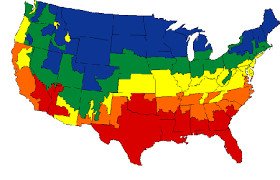
An electric furnace is sized by its kilowatt (kW) input, which converts directly to BTU output at 100% efficiency — 1 kW of electricity produces exactly 3,412 BTU per hour of heat. The correct size for a house depends on the climate zone, the insulation level, and the square footage, just as with a gas furnace. The difference is that an electric furnace has no combustion losses, no venting, and no AFUE rating — every watt of electricity that enters the furnace becomes heat that enters the ductwork. The sizing question is purely about how many kilowatts are needed to match the house’s heat loss on the coldest day.
The critical constraint for an electric furnace is not the furnace itself — it is the home’s electrical service. A 15 kW electric furnace draws roughly 63 amps at 240 volts. A 20 kW furnace draws roughly 83 amps. A 25 kW furnace draws roughly 104 amps. These are very large electrical loads that require dedicated circuits, heavy-gauge wiring, and sufficient capacity in the main electrical panel. Many homes that were originally heated with gas do not have the electrical capacity for a full-size electric furnace without a service upgrade — typically from 100 amps to 200 amps, which costs $2,000 to $4,000.
Electric Furnace Sizing Chart by Climate Zone and Square Footage
| Home Size | Warm Climate (Zone 1-2) | Mixed Climate (Zone 3-4) | Cold Climate (Zone 5-6) | Very Cold (Zone 7) |
| 800-1,200 sq ft | 5-10 kW (17-34K BTU) | 10-15 kW (34-51K BTU) | 15-18 kW (51-61K BTU) | 18-20 kW (61-68K BTU) |
| 1,200-1,800 sq ft | 10-15 kW (34-51K BTU) | 15-18 kW (51-61K BTU) | 18-20 kW (61-68K BTU) | 20-25 kW (68-85K BTU) |
| 1,800-2,500 sq ft | 15-18 kW (51-61K BTU) | 18-20 kW (61-68K BTU) | 20-23 kW (68-78K BTU) | 23-27 kW (78-92K BTU) |
| 2,500-3,500 sq ft | 18-20 kW (61-68K BTU) | 20-23 kW (68-78K BTU) | 23-27 kW (78-92K BTU) | 27-30 kW (92-102K BTU) |
These ranges are starting points for a Manual J load calculation. The same caveats apply as with gas furnace sizing: a well-insulated, tightly sealed house in a cold climate may need a smaller electric furnace than a poorly insulated, leaky house in a mixed climate. The square footage is a proxy for heat loss, not a direct measure of it. A Manual J calculation for a specific house — accounting for insulation, windows, air leakage, ceiling height, and design temperature — produces the correct kW size. The chart above narrows the range to the likely correct answer.
kW to BTU: The Electric Furnace Conversion That Is Always 100%
| Electric Furnace kW | BTU per Hour Output | Amps at 240V | Breaker Size |
| 5 kW | 17,060 BTU | 21 amps | 30 amp |
| 10 kW | 34,120 BTU | 42 amps | 60 amp |
| 15 kW | 51,180 BTU | 63 amps | 80 amp |
| 20 kW | 68,240 BTU | 83 amps | 100 amp |
| 25 kW | 85,300 BTU | 104 amps | 125 amp |
| 30 kW | 102,360 BTU | 125 amps | 150 amp |
The Electrical Service Trap
A 20 kW electric furnace on a 100-amp electrical service leaves roughly 17 amps of remaining capacity for the entire rest of the house — the lights, the refrigerator, the water heater, the dryer, the range. This is not enough. A home with a 100-amp service that is converting from gas to electric heat almost always needs a 200-amp service upgrade ($2,000 to $4,000) before the electric furnace can be installed. The cost of the service upgrade can exceed the cost of the furnace itself. If the home has 200-amp service, a 20 kW electric furnace is feasible. If it has 100-amp service, an electric furnace larger than 10 kW to 15 kW is likely not feasible without the upgrade.
Electric Furnace vs. Gas Furnace Sizing: The Efficiency Difference
A 60,000 BTU input gas furnace at 80% AFUE delivers 48,000 BTU output. A 15 kW electric furnace delivers 51,180 BTU output. Both heat the same house. The gas furnace burns 60,000 BTU of fuel to deliver 48,000 BTU of heat. The electric furnace converts 100% of its input to heat — 51,180 BTU in equals 51,180 BTU out. The electric furnace has no exhaust pipe, no chimney, no combustion air requirement, and no condensate drain because there is no combustion. It is a heating element and a blower in a metal box, simpler than any gas furnace and with fewer parts to fail.
The electric furnace’s 100% efficiency is not an energy bargain. Electricity costs significantly more per BTU than natural gas in most of the United States. At the national average residential rates — roughly $0.15 per kWh for electricity and $1.20 per therm for natural gas — the cost per million BTU of heat is roughly $44 for electricity versus $12 for an 80% gas furnace and $10 for a 95% gas furnace. The electric furnace is cheaper to purchase and install — $1,500 to $3,500 versus $5,000 to $8,000 for a gas furnace — but two to four times more expensive to operate. The purchase savings are consumed by the operating cost within 3 to 7 years in most climates.
When an electric furnace makes sense: In mild climates where the furnace runs for fewer than 500 hours per year, the operating cost difference between electric and gas is small in absolute dollars — $500 to $800 per year for electric versus $200 to $300 for gas. The $2,000 to $5,000 purchase price savings on an electric furnace covers 5 to 10 years of operating cost difference. In a cold climate where the furnace runs 1,500 to 2,000 hours per year, the operating cost difference is $1,500 to $2,500 per year, and the purchase savings are consumed within 2 years. Electric heat is a mild-climate solution.
Staging in Electric Furnaces: How It Works
Electric furnaces achieve multi-stage heating not by modulating a gas valve but by energizing multiple heating elements in sequence. A 20 kW electric furnace typically has four 5 kW elements. The thermostat or the furnace control board energizes the elements one at a time as needed. On a mild day, only one or two elements energize, and the furnace delivers 5 kW or 10 kW of heat. On a cold day, all four elements energize, and the furnace delivers the full 20 kW. This is the electric equivalent of a modulating gas furnace — the heat output adjusts to the load by adding or removing elements.
The staging capability means an electric furnace does not have to be sized as precisely as a single-stage gas furnace. A 20 kW electric furnace that is oversized for the house will run on one or two elements most of the time, delivering 5 kW to 10 kW of heat — matching the load without short-cycling. The oversizing costs more at purchase because a 20 kW furnace costs more than a 15 kW furnace, and the larger circuit and breaker cost more to install. But the oversizing does not produce the comfort and efficiency penalties that an oversized gas furnace produces. The electric furnace’s staging makes it more forgiving of imprecise sizing.
FAQ: Common Questions About Electric Furnace Sizing
Should I install an electric furnace or a heat pump?
In most climates, a heat pump is the better choice. A heat pump delivers 2 to 4 times as much heat per kilowatt-hour of electricity as an electric furnace because it moves heat from outside rather than creating it. An electric furnace has a coefficient of performance (COP) of 1.0 — one unit of electricity produces one unit of heat. A heat pump has a COP of 2.0 to 4.0 depending on the outdoor temperature. The heat pump costs $3,000 to $8,000 more to install than an electric furnace of the same capacity but reduces the electric heating bill by 50% to 75%. In a cold climate where winter temperatures drop below the heat pump’s effective range, a heat pump with an electric furnace backup — called a dual-fuel or hybrid system — provides heat pump efficiency for mild days and electric resistance heat for the coldest days.
Can an electric furnace be too large for my electrical panel even if it is the right size for my house?
Yes — this is the most common obstacle to electric furnace installation. A 20 kW electric furnace is the correct size for a 2,000-square-foot house in a cold climate. It draws 83 amps at 240 volts and requires a 100-amp breaker. If the house has a 200-amp service with available capacity, the installation is straightforward. If the house has a 100-amp service, the electric furnace alone consumes the entire service capacity, and no other electrical load can run while the furnace is operating. The solution is either a service upgrade to 200 amps ($2,000 to $4,000) or a smaller electric furnace paired with a heat pump that carries the heating load on all but the coldest days.
Size the Furnace to the Heat Loss, and the Electrical Service to the Furnace
An electric furnace is sized by kilowatts, and the correct kW is the one that matches the house’s heat loss as calculated by a Manual J. A 1,500-square-foot house in a cold climate typically needs a 15 kW to 20 kW electric furnace. The electrical service must be large enough to supply the furnace plus the rest of the house’s electrical loads. A 200-amp service is adequate for most electric furnace installations up to 25 kW. A 100-amp service is almost never adequate for an electric furnace larger than 10 kW to 15 kW.
Before buying an electric furnace, have an electrician evaluate the electrical service. The furnace costs $1,500 to $3,500. The service upgrade — if needed — costs $2,000 to $4,000. The total project cost is determined by the electrical panel, not the furnace. An electric furnace that cannot be connected to a functioning electrical service is a very expensive space heater sitting in a box in the basement.