

How Long Do Tesla Solar Panels Last? Warranty, Degradation, and Real-World Lifespan
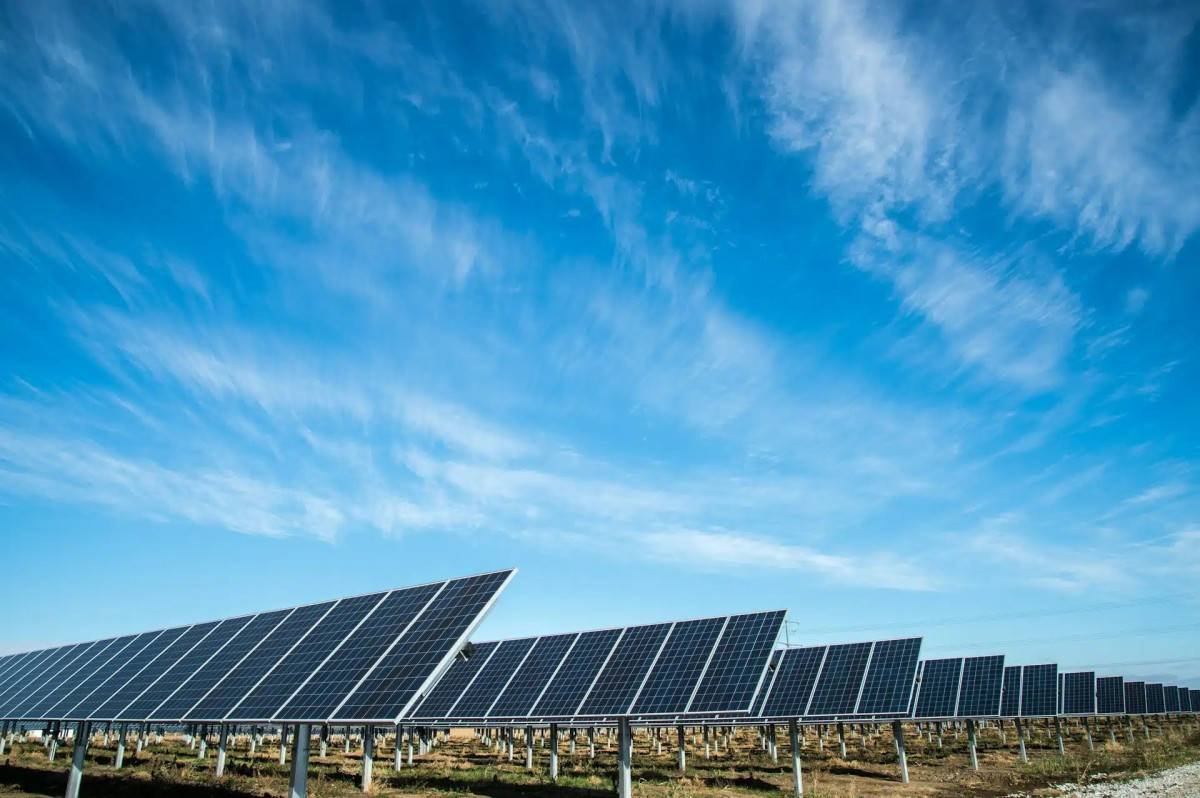
Tesla solar panels are warrantied for 25 years. That is the industry standard for premium panels from any major manufacturer. The warranty guarantees that the panels will produce at least 80 percent of their original rated power output by the end of year 25. But the warranty is a floor, not a ceiling. Most panels, including Tesla’s, continue producing electricity well beyond the warranty period, just at a gradually declining rate.
Here is what happens to Tesla solar panels at each stage of their life, how their degradation compares to other brands, and what you should expect from your system over decades of operation.
The Tesla Solar Panel Warranty: What It Covers
Tesla offers a 25-year performance warranty on its solar panels. The warranty guarantees that the panels will produce at least 98 percent of their rated power in the first year and that annual degradation will not exceed 0.5 percent per year thereafter. By year 25, the panels are guaranteed to produce at least 80 percent of their original rated output.
This is a performance warranty, not a product warranty. The product warranty covers manufacturing defects, delamination, and premature failure. Tesla’s product warranty for solar panels is 25 years, which covers the panels themselves against defects in materials and workmanship. The inverter warranty is 12.5 years for the Tesla-branded inverter. If you have a third-party inverter like SolarEdge or Enphase, the warranty is provided by that manufacturer, typically 12 to 25 years depending on the model.
The workmanship warranty on the installation itself is 10 years for Tesla direct installations and varies for certified installer installations. This covers issues related to the mounting, wiring, and roof penetrations.
How Fast Tesla Panels Actually Degrade
The warranty promises a maximum degradation rate of 0.5 percent per year. In practice, most modern monocrystalline panels, including Tesla’s, degrade slower than the warranty maximum. Independent testing by the National Renewable Energy Laboratory found that modern solar panels degrade at a median rate of approximately 0.5 percent per year, with premium panels often degrading at 0.3 to 0.4 percent annually.
At 0.5 percent annual degradation, a Tesla panel produces approximately 88 percent of its original output at year 25. At 0.4 percent, it produces approximately 90 percent. The difference between these rates over 25 years is about 2 percent of total lifetime production. This is a small number individually but adds up across a large system.
The first year typically sees the highest degradation, often 1 to 2 percent, as the panels settle into operation. This initial drop is factored into the warranty, which allows up to 2 percent degradation in year one before the 0.5 percent annual cap begins.
Tesla sources its panels from multiple manufacturers, primarily Tier 1 producers including Qcells and Hanwha. The panel quality is consistent with other premium residential panels on the market. Tesla does not manufacture its own solar cells. It uses rebranded panels from established manufacturers, which means the degradation characteristics are determined by the underlying panel technology, not by Tesla specifically.
The Inverter: The Component That Fails First
Solar panels routinely outlast their inverters. The panels themselves have no moving parts and degrade slowly through exposure to UV radiation and thermal cycling. The inverter, which converts DC electricity from the panels into AC electricity for your home, contains capacitors, circuit boards, and cooling fans that wear out faster than silicon solar cells.
Tesla’s in-house inverter carries a 12.5-year warranty. In practice, string inverters typically last 10 to 15 years before needing replacement. The replacement cost for a Tesla inverter is approximately $1,500 to $2,500 including labor. This replacement is a planned expense that should be factored into your lifetime cost calculation when purchasing a solar system.
If your Tesla system uses microinverters from Enphase, those carry a 25-year warranty and typically last the full life of the panels. The trade-off is that microinverter systems cost more upfront. The cost difference roughly equals the present value of the inverter replacement for a string inverter system. Neither is clearly superior on a lifetime cost basis. The decision comes down to shade conditions, roof layout, and installer preference.
Tesla Powerwall Lifespan
Tesla Powerwall, the battery storage system often paired with Tesla solar panels, carries a 10-year warranty. The warranty guarantees that the battery will retain at least 70 percent of its original capacity by the end of year 10 with unlimited cycles when used for solar self-consumption and backup power.
Lithium-ion batteries degrade through calendar aging and cycle aging. Calendar aging occurs regardless of use and is driven primarily by temperature and state of charge. Cycle aging occurs each time the battery charges and discharges. A Powerwall in a typical daily cycling application, charging from solar during the day and discharging at night, will complete approximately 3,500 to 4,000 cycles over 10 years.
After 10 years, the Powerwall still functions but stores less energy. At 70 percent of its original 13.5 kilowatt-hour capacity, a Powerwall holds approximately 9.5 kilowatt-hours. This is still useful for time-of-use shifting and partial backup but may not provide full-home backup for extended outages. Replacement cost for a Powerwall is approximately $8,000 to $11,000 installed, though prices vary with installation complexity and local labor rates.
The Powerwall warranty period of 10 years is notably shorter than the solar panel warranty of 25 years. This means a solar-plus-storage system will likely need one or two battery replacements over the life of the panels. This is not unique to Tesla. All lithium-ion home batteries have similar lifespans. The technology has not yet reached the multi-decade durability of solar panels themselves.
Real-World Lifespan Beyond the Warranty
Solar panels do not stop working at year 25. They continue producing electricity for decades beyond the warranty period. Panels installed in the 1980s and 1990s, using much older technology than today’s panels, are still producing power at 70 to 80 percent of their original output after 30 to 40 years.
A Tesla panel installed today can reasonably be expected to produce useful electricity for 30 to 40 years. The output will decline gradually each year, but the decline is predictable and slow. At year 30, following 0.5 percent annual degradation after the first-year drop, the panel produces approximately 84 percent of its original output. At year 35, approximately 82 percent. These numbers assume the panels are not physically damaged by hail, falling branches, or other impacts, which are not covered by the degradation warranty.
The limiting factor for system lifespan is usually not the panels. It is the inverter, which needs replacement at year 12 to 15, and potentially the roof underneath the panels. If panels are installed on a roof with 10 years of remaining life, the roof will need replacement before the panels degrade meaningfully. Removing and reinstalling panels for a roof replacement costs $3,000 to $6,000, which is a significant mid-life expense that should be planned for.
Tesla vs. Other Panel Brands: Lifespan Comparison
Tesla panels use the same monocrystalline PERC cell technology as panels from SunPower, REC, Panasonic, and LG. The physical degradation mechanism is the same regardless of brand. Light-induced degradation, potential-induced degradation, and thermal cycling affect all crystalline silicon panels similarly.
SunPower Maxeon panels use a different cell architecture with a solid copper backing that eliminates the grid lines on the front of the cell, which reduces degradation from thermal cycling. SunPower warrants 92 percent output at year 25 compared to Tesla’s 80 percent. REC Alpha panels use heterojunction technology that degrades slower than standard PERC cells. Panasonic EverVolt panels use similar heterojunction technology. These premium panels degrade at 0.25 to 0.35 percent per year compared to Tesla’s 0.5 percent warranty rate.
Whether the lower degradation is worth the premium price of these panels depends on how long you plan to own the system. Over 25 years, the difference in total production between a panel at 80 percent and one at 92 percent is approximately 6 to 8 percent more lifetime energy. If the premium panel costs 30 percent more, the math does not work unless you value the longer warranty and the brand reputation beyond the pure energy economics. For most homeowners, Tesla’s 25-year warranty at 80 percent output is adequate, and the cost savings compared to premium panels are better allocated toward a larger system size or battery storage.
Frequently Asked Questions
What happens after the 25-year warranty expires?
Nothing. The panels continue producing electricity. You stop receiving warranty coverage for output guarantees and manufacturing defects, but the panels themselves keep working. Many panels installed in the 1990s are still producing power today. You should expect continued operation for another 10 to 15 years beyond the warranty period, with output gradually declining each year. The inverter, however, will have already been replaced once by year 25 and may be approaching its second replacement.
Are Tesla panels more or less durable than other brands?
Comparable. Tesla uses Tier 1 panels from major manufacturers like Qcells. The build quality is consistent with other mid-to-premium residential panels. Tesla panels are not uniquely durable or uniquely fragile. The dual-glass construction on some Tesla panel models provides better moisture resistance than standard plastic back sheet panels, which is an advantage in humid and coastal environments. The all-black aesthetic is a cosmetic preference, not a durability feature.
Do Tesla solar panels protect the roof underneath?
Partially. Panels shade the roof from direct UV exposure, which extends the life of the shingles underneath them. The roof area under panels typically looks newer than the exposed roof when panels are eventually removed. However, the mounting hardware penetrates the roof, and those penetrations are sealed with flashing and sealant that degrade over time. The penetrations are the weak point, not the covered shingles. A properly installed Tesla system with correctly flashed mounts should not cause roof leaks for the life of the roof. If the roof leaks around a mount, the 10-year workmanship warranty covers the repair.