

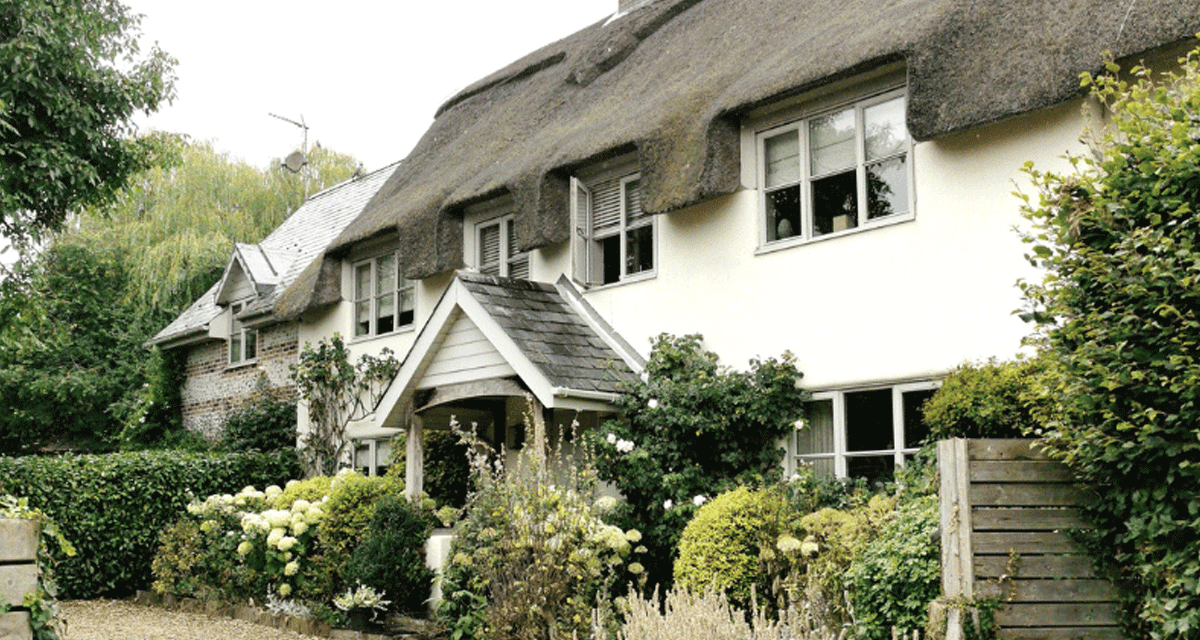
Can You Get a Mortgage for a Second Home in the UK? A Complete Buyer’s Guide
Buying a second home in the UK is exciting, whether it’s for holidays, investment, or a family getaway. But one of the first questions many buyers ask is: “Can I get a mortgage for a second home?”
The answer is yes — but second-home mortgages work differently from your first home. Understanding the rules, costs, and options can save time, money, and stress.
This guide explains everything UK buyers need to know about getting a mortgage for a second home, in a clear, friendly way.
What is a Second-Home Mortgage?
A second-home mortgage is a loan used to purchase a property that is not your main residence. This could include:
- A holiday home in the UK
- A property you plan to rent out occasionally
- A family home used for weekends or holidays
It’s important to know that a second home is different from a buy-to-let property. Buy-to-let mortgages are for properties you intend to rent out full-time, whereas a second-home mortgage can be for personal use, holiday use, or a mix of both.
Can You Get a Second-Home Mortgage in the UK?
Yes, most lenders offer mortgages for second homes, but the process is stricter than for a first property. Lenders see second homes as higher risk because you may have another mortgage already, and the property might be left empty for periods.
Key points about eligibility:
- Deposit Requirements
- Usually higher than for first homes, typically 15–25% of the property price.
- Some lenders may ask for even more if the property is high value.
- Affordability Checks
- Lenders will look at your income, outgoings, and existing debts.
- They want to ensure you can cover both mortgages, even if interest rates rise.
- Interest Rates
- Rates are usually slightly higher than on first-home mortgages.
- You may also see fewer deals with low introductory rates.
- Property Type and Location
- Some lenders restrict certain types of properties, e.g., flats above commercial premises.
- Coastal or rural properties may face extra insurance requirements.
Deposit and Costs to Consider
Buying a second home often comes with higher upfront costs:
- Deposit – usually 15–25%
- Stamp Duty – second homes attract a 3% surcharge (England & Northern Ireland)
- Valuation Fees – lenders may charge extra to assess the property
- Legal Fees – conveyancing, searches, and registration costs
These costs add up quickly, so buyers should budget carefully.
Mortgage Options for Second Homes
There are a few main types of mortgages for second homes:
- Standard Second-Home Mortgage
- Similar to a first-home mortgage but with stricter rules.
- Can be used for personal holiday homes or occasional rentals.
- Buy-to-Let Mortgage
- If you plan to rent the property full-time, you may need a buy-to-let mortgage.
- These are assessed based on potential rental income rather than personal income.
- Interest-Only Mortgage
- Available in some cases, usually for buy-to-let, but less common for holiday homes.
- You pay interest only during the term and repay the principal later.
- Bridging Loan
- Short-term option if you need to buy quickly before selling another property.
- Typically more expensive, used in niche cases.
How Lenders Decide if You Qualify
Lenders assess second-home applicants differently than first-time buyers:
- Income vs. Mortgage Payments – They check that you can cover both mortgages comfortably.
- Credit Score – Higher scores improve your chances.
- Existing Mortgages – If you already have a mortgage, this affects affordability checks.
- Property Use – Lenders need to know if it’s for personal use, rental, or a mix.
Some lenders also consider local market conditions. Areas with low demand may be harder to get financed, while popular holiday locations or cities with high rental demand are usually easier to approve.
Importance of Estate Agent Advice
Navigating the second-home mortgage market can be confusing. This is where a local estate agent becomes invaluable.
Estate agents can:
- Recommend properties that meet lender requirements
- Help buyers understand expected rental income if needed
- Advise on local mortgage lenders familiar with second homes
- Guide buyers through potential pitfalls, such as properties with unusual leasehold restrictions
Working with an estate agent ensures buyers make informed decisions and avoid properties that might cause mortgage problems later.
Tips to Increase Your Chances of Approval
- Save for a larger deposit – even a few percent more can improve offers.
- Keep personal debts low – lenders consider your total borrowing.
- Show proof of income – payslips, tax returns, or pension income.
- Consider a specialist lender – some banks focus on second homes or holiday lets.
- Plan for long-term costs – including insurance, maintenance, and council tax.
Final Thoughts
Getting a mortgage for a second home in the UK is entirely possible, but it’s different from buying your main home. Higher deposits, stricter affordability checks, and extra costs make planning essential.
By understanding mortgage options, total costs, and the lender’s criteria — and by consulting a trusted estate agent — buyers can confidently secure the right property.
A second home is not just a place to enjoy; it can also be a smart financial investment if approached with care, planning, and the right professional guidance.