

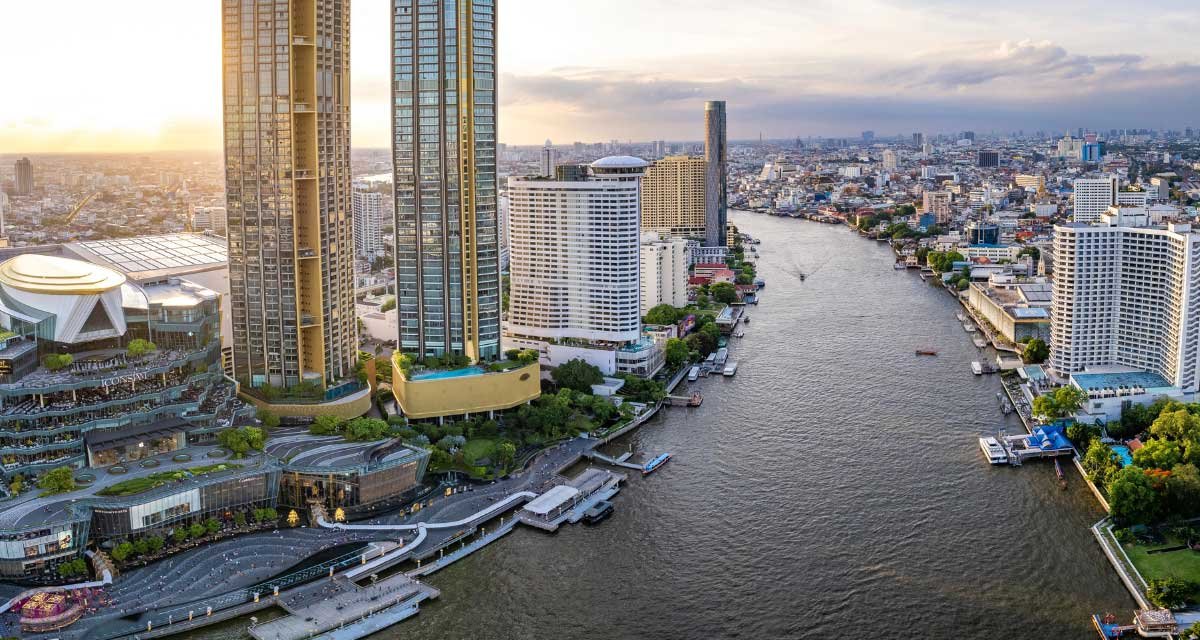
Riding the Wave: Thailand’s Real Estate Renaissance and Global Investment Momentum
As the global real estate market hurtles toward a projected $4.74 trillion valuation in 2026—up from $4.44 trillion the year before—Thailand is quietly, yet confidently, stepping into the global spotlight. A once-sleepy destination is now pulsing with development and investor interest. Tools like Global-Property.Investments are bridging international demand with local opportunity, making it easier than ever to navigate the terrain.
The Bigger Picture: Global Forces at Play
To grasp why Thailand matters now, it helps to step back and look at what’s happening around the world. Property markets are swelling—fueled by urbanization, digitization, and demographic shifts.
Asia Pacific commands more than 40 percent of the global market, a statistic that underscores the region’s gravitational pull. Residential real estate remains the cornerstone, with 37 percent of market share in 2024—a signal that homes, not offices or retail, continue to dominate value creation.
PropTech Revolution: The Digital Overlay
Real estate used to be static. A flyer. A phone call. A handshake. But now, the market is morphing. Technology has upended the timeline and geography of transactions.
- Virtual Experiences (22%): Virtual tours and immersive 3D walkthroughs allow buyers to view properties without stepping foot onsite.
- Cloud-Based Systems (18%): Leasing, maintenance, payments—all managed through online platforms.
- Custom Regional Platforms (23%): Country-specific tech solutions cater to legal and cultural nuances.
- Residential Product Innovation (39%): New builds are being shaped by digital expectations, from smart locks to energy dashboards.
- Commercial Building Tech (31%): Think coworking space management, climate control systems, and real-time occupancy tracking.
In Thailand, the adoption curve is steepening. Remote purchasing, AI-based valuation models, blockchain-powered contracts—it’s all becoming the norm, not the novelty.
Thailand’s Unique Appeal: Why It’s Gaining Ground
Thailand’s emergence isn’t just about sunshine and skyscrapers. Several macroeconomic and structural tailwinds are converging.
Economic Signals:
- GDP is on a gentle incline—2.1 percent growth in 2025, tapering slightly to 1.6 percent in 2026.
- Central banks remain accommodative, ensuring interest rates stay low and liquidity remains available for mortgages and developers alike.
Tourism Reawakens:
- After pandemic-era droughts, Thailand is targeting 25 million international visitors in 2025, with implications for everything from short-term rentals to hotel-adjacent condos.
Infrastructure Game-Changers:
- High-speed rail projects connecting Bangkok, Pattaya, and Chiang Mai are transforming transit and unlocking new land value corridors.
- Airports in Suvarnabhumi and Phuket are expanding, welcoming higher passenger throughput and better regional access.
Rental Performance:
- Gross national yield hit 6.49 percent in Q1 2026, up from 6.28 percent just a few months prior.
- Returns are even more attractive in select markets and property classes.
What the Data Says: Deep Dive into Thailand’s Metrics
Condominium Pricing Benchmarks:
Bangkok condo pricing lands between THB 150,000 and 155,000 per square meter (roughly USD 4,200–4,300), though price bands fluctuate wildly. Suburban units go for as low as THB 72,000, while ultra-central Sukhumvit projects can exceed THB 300,000 per square meter.
Rental Yields by Region:
| City | Avg. Gross Rental Yield |
| Bangkok (all areas) | 6.22% |
| Phuket | 5.05% |
| Chon Buri (Pattaya) | 5.51% |
| Nonthaburi | 7.14% |
| Samut Prakan | 8.52% |
Short-Term Rental Markets:
Phuket and Pattaya top the charts during peak seasons with 8 to 10 percent returns. Bangkok’s central business districts maintain a healthy 5 to 7 percent yield, buoyed by expats and corporate tenants.
The Legal Angle: Foreign Ownership Simplified
Thailand doesn’t shut foreign investors out—it guides them in.
- Foreign nationals can own up to 49 percent of the saleable area in any given condominium development.
- Leasehold agreements, typically for 30 years, often come with renewal clauses and extensions.
- Companies registered with Thailand’s Board of Investment (BOI) may qualify for land ownership under special circumstances.
Three golden rules to buy property abroad for investment:
- Always get a written confirmation of the foreign ownership quota.
- Transfer funds through legal channels using a Foreign Exchange Transaction form.
- Hire a property lawyer for due diligence and contract review.
Real-World Example: A Young Investor’s Bangkok Bet
Take the case of a young European professional. She purchased a 26-square-meter unit at Good Day Sukhumvit 93 in Phra Khanong for THB 2,490,000 (about USD 75,000). Her monthly rental income of THB 12,000 puts her gross yield at 6 percent. With a location minutes from a BTS station, the unit stays occupied year-round with barely any vacancy downtime.
Beyond Borders: Diversification Through International Property
Thailand may be hot, but it’s not the only play. Investors looking for geographic diversification are expanding portfolios across borders.
- Ho Chi Minh City and Lisbon are becoming emerging investor magnets, thanks to economic momentum and regulatory liberalization.
- Berlin, while not flashy, remains a consistent performer with stable rent laws and strong tenant protections.
Platforms like Global-Property.Investments make these searches frictionless—curating listings, checking local laws, and guiding buyers through the maze of paperwork.
Strategic Takeaways: Thinking in Horizons
Short-Term Focus: Zero in on properties near soon-to-be-launched high-speed rail stations. Transit infrastructure drives appreciation.
Medium-Term Game: Mixed-use developments with digital-first amenities—co-working lounges, smart security, fiber internet—are capturing modern renter preferences.
Long-Term Vision: Watch for potential reforms in foreign ownership laws and track major infrastructure expansions. Policy changes can rapidly reshape ROI calculations.
In Closing
Thailand’s real estate market, once seen as niche or speculative, is now turning heads on the global stage. With a supportive legal framework, respectable yields, and evolving infrastructure, it offers a compelling proposition for both seasoned and first-time investors. Add in digital innovation and increasing cross-border transparency, and you’ve got a market that’s not just open—but accelerating.