

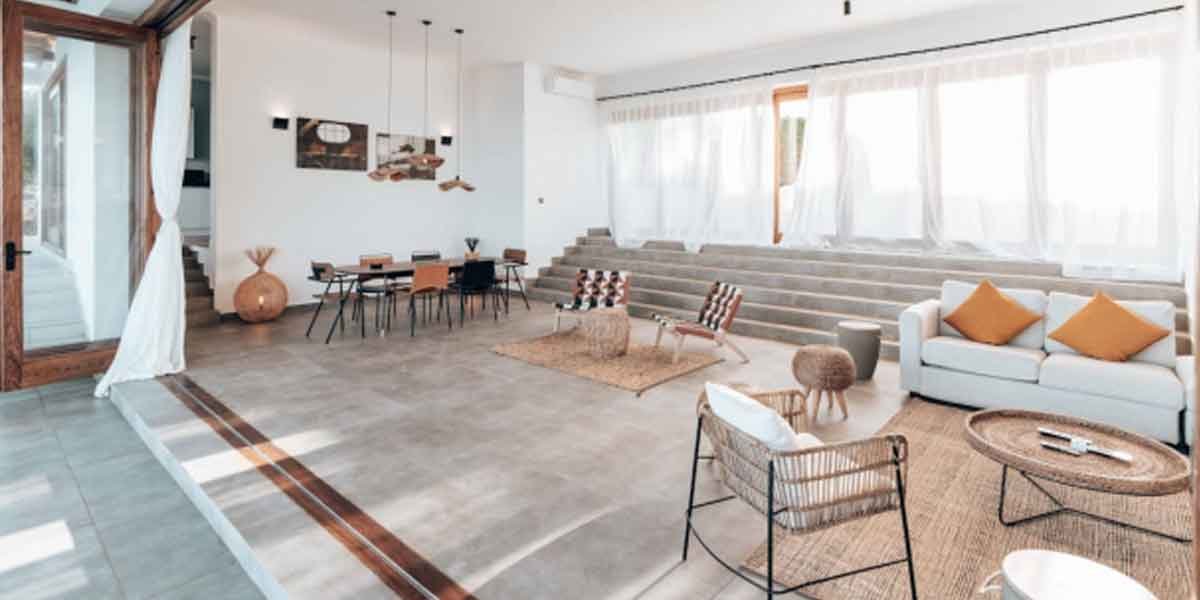
The Art of Dividing Large Rooms Without Building Walls
Tired of having awkward spaces in your open floor plan?
Large rooms are great – until they’re not defined. Suddenly that open floor plan feels wasted.
And here’s the crazy part…
You don’t need to take down walls or hire contractors.
You can divide any big space with basic decorating tricks. The best part? These options are all inexpensive and totally reversible.
What you’ll learn:
- Why open floor plans should be broken up
- Create zones with area rugs
- Smart furniture arrangement
- Other Room Divider Ideas
- Creating harmony between your spaces
Let’s dig in.
Why Open Floor Plans Should Be Broken Up
Open floor plans have been popular for years. They create flow and make our houses feel larger than they are.
But something has been happening…
More and more homeowners are struggling to find a purpose for empty space. With open floor plans lacking any walls or visual breaks, large rooms look wasted.
In fact, home office trends research showed that 77% of experts agreed multi-use spaces were the biggest home trend in 2020. Functional furniture that could adapt to any room was also a big request.
As more people began working remotely, it was clear that homes needed offices, workspaces, and lounging areas all squeezed into one giant room.
Here’s the downside of an undefined space:
- Furniture gets pushed awkwardly in the center
- The space feels cold and unfriendly
- Chaos happens when everything competes for attention
- You’re wasting square footage
Solution: Give each room a purpose by creating zones.
Create Zones With Area Rugs
It all starts with one simple item.
Area rugs are by far the best tool you have to define rooms. When you place a rug in a large space, people instantly know where one zone begins and another ends.
That’s why oversized area rugs like 12×15 rug styles are so perfect for big living spaces. They cover enough square footage to anchor your main seating group while creating separation from other areas.
Benefits of using rugs to create zones:
- They can be moved (and changed!) at anytime
- Add texture to hard floor surfaces
- Help dampen sound in spacious rooms
- Come in every style and material imaginable
You’ll want to pick the right size rug. If it’s too small, it’ll look like an afterthought. Too big and you might as well not divide the space at all.
Tip: Ideally your 12×15 rug will be placed so it extends 6-8 inches beyond your furniture group on all sides.
The front legs of your furniture should all rest on your rug as well. This visually attaches the pieces to your rug and completes the look.
Smart Furniture Arrangement
Arranging your furniture is the second best way to create visual walls.
Rather than butting all your furniture up against the walls, let some pieces off toward the center. A sofa perpendicular to your wall can act as a divider without obstructing light.
Here are a few furniture tips to define spaces:
- Use the back of a sofa to anchor the end of your conversation area
- Place bookcases in between spaces to break up traffic flow
- Create clear paths that help guide people through your rooms
- Cluster seating together instead of making long rows
Console tables are an amazing way to place furniture behind your sofa. Lean lamps on them to create visual anchors that signal “this is where the living room ends.”
You’ll want your furniture placement to make each zone feel like a complete room. Yet cohesive enough that they flow together.
Other Room Divider Ideas
But what if you still need some extra help?
Maybe you have a huge great room you need to separate into spaces. Here are some other ideas to consider:
Room divider options to consider:
- Tall plants or hanging plants: Large indoor plants are a great way to break up a space. They help add some life, color, and soften hard edges.
- Curtain panels: Think ceiling to floor curtains that you can draw back when needed.
- Open shelving: Bookcases and shelving can help section off areas while maintaining an open feel.
- Folding screens: Screen rooms are a great temporary fix if you need to divide a room.
Pro-tip: Lighting helps define separate spaces too.
Think of different light fixtures or lamp styles for each of your zones. That way, when it turns dark you’ll still have identified areas. Maybe that’s a floor lamp in your reading corner and pendant lighting over your dining table.
Mix and match the solutions that work for you. Remember you aren’t limited to just one room dividing tactic.
Creating Harmony Between Your Spaces
Divide your rooms up however you want…but they still need to flow together.
If you jump out of bed and land in your living room rug, but it looks totally different than your kitchen….it won’t feel like one room anymore. Elements of each space should blend together.
Here are a few things you’ll want to repeat throughout each zone:
- Color scheme: Stick with similar colors throughout each of your rooms.
- Flooring: Let your main flooring material carry throughout the entire space.
- Furniture style: Don’t mix contemporary furniture in one room with traditional in another section.
- Balance: Large rooms can overpower a small rug. Make sure you have visual weight in other areas.
You can even tie your rooms together by sharing similar patterns or colors on your rugs. Treat each rug as a chapter of the same story, rather than completely different books.
Also think about traffic patterns. You don’t want someone bumping into your furniture every time they move between areas. Leave walkways clear and keep sight lines open when possible.
Wrapping Up
No room is too big or too large to feel defined.
Just remember these quick tips:
- Break up the space with oversized area rugs.
- Smartly place your furniture away from walls.
- Repeat colors and styles throughout each zone.
- Layer in extra room dividers where you need more support.
All of these tips are nonpermanent too. You can move furniture, trade out rugs, and adjust your rooms to your needs.
Don’t spend another day living in a large room that doesn’t function well for anyone.
Grab your tape measure and start visualizing where you can section off spaces in your home.
It’s time your large room lived up to its potential.