

What is the best backup for a power outage?
Power outages used to feel rare, like a once-every-few-years story you’d tell later. That’s not how it feels now.
Between heavier storms, heat waves pushing grids past comfort, and aging infrastructure that creaks under pressure, outages have become oddly familiar.
It inevitably leads to the question we’re all asking: What is the best backup for a power outage?
Gasoline generators
For decades, when people thought about power outages, they pictured a gas generator roaring away in the yard. These machines are powerful and relatively affordable for the output they deliver. They can run heavy loads and keep a whole house alive, assuming they’re sized correctly.
Here’s the thing, though. They come with trade-offs that are easy to ignore until you’re dealing with them at 2 a.m.
Gas storage, fumes, noise, and maintenance all add friction. In cold weather, fuel can gel. In long outages, fuel becomes the bottleneck. And yes, safety matters—carbon monoxide is no joke.
They work well, yet demand constant attention. That tension pushes many people to look elsewhere.
Diesel and propane generators
Diesel generators are common in commercial settings because they’re efficient and durable. Propane units burn cleaner and store fuel more safely over time. Both improve on gasoline in specific ways.
But they still rely on combustion. They still make noise. They still require space, ventilation, and planning. For homes in dense neighborhoods or apartments, they’re often impractical.
Battery-based systems
Over the last few years, something subtle has happened. Battery technology didn’t just improve; it slipped into daily life.
Phones, laptops, electric cars—people grew comfortable trusting stored energy. That same confidence now extends to portable power stations.
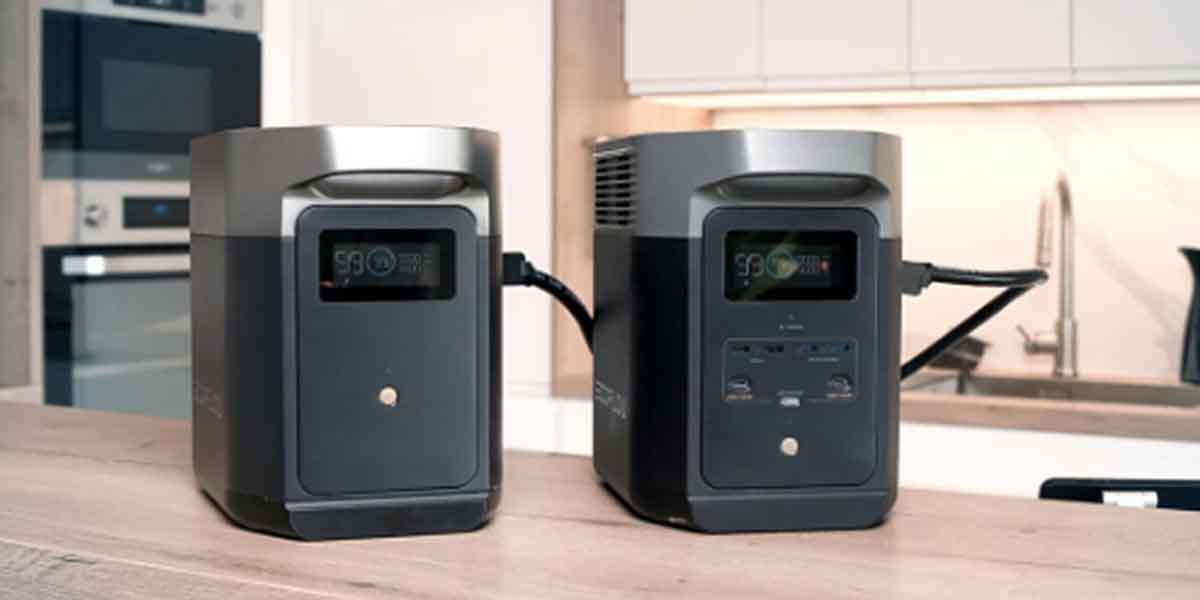
Battery-based backups don’t announce themselves. They sit there, silent, clean, and ready. No fumes. No pull cords.
No midnight runs to find fuel during a storm. You plug them in, keep them topped up, and when the outage hits, power flows like nothing happened.
Solar power
Solar panels feel like the obvious partner to batteries. Sunlight comes in, power goes out—problem solved, right? Sort of.
Solar works beautifully during daytime outages, assuming the weather cooperates and the system is designed for backup use.
Grid-tied solar without batteries shuts down during outages for safety reasons, which surprises a lot of people.
Solar plus power stations is powerful, but it’s not magic. It’s a system, and systems need thoughtful design.
So what is the best backup for a power outage, really?
It’s the one that matches your priorities, fits your space, respects your tolerance for noise and upkeep, and integrates into your life before the lights go out.
For many people, that increasingly points toward portable, battery-based energy storage paired with smart habits and, when possible, renewable input.
Not because it’s trendy. Not because it’s flashy. But because it works quietly, predictably, and humanely when conditions are less than ideal.