

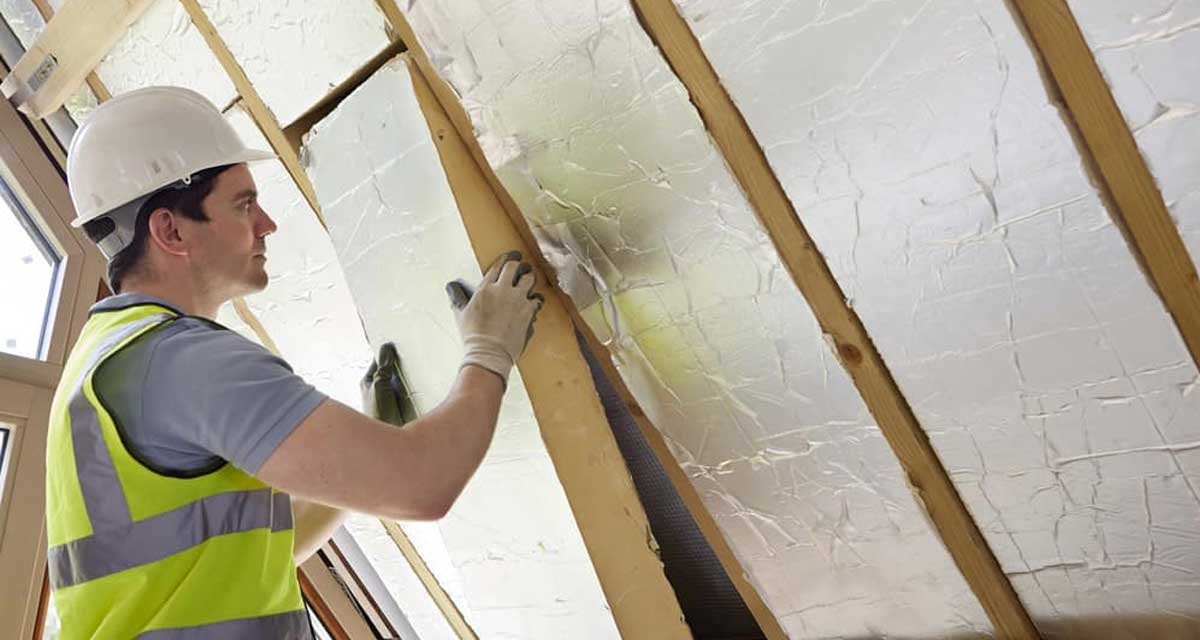
The Benefits and Challenges of Installing Insulation on the Roof Portion Only
Insulating “the roof portion only” sounds straightforward: heat rises, the roof gets blasted by sun, so why not focus your insulation budget right where the temperature extremes hit? In some homes, it’s a smart move. In others, it creates comfort problems – or worse, moisture issues that don’t show up until months later, says Berkeley County Property Management.
The key is understanding what you’re really insulating: the roof deck (creating a conditioned attic or “hot roof”) versus the attic floor (keeping the attic outside the thermal envelope). Those two approaches behave very differently, and roof-only insulation sits right at the intersection of energy performance, building science, and practical constraints like access and cost.
If you’re weighing whether this approach fits your home type, climate, and HVAC layout, this overview of when roof-focused insulation makes sense is a helpful starting point—especially for understanding the real-world conditions that make roof-only strategies work (or backfire).
Roof-Only Insulation: What It Means in Practice
Roof-only insulation typically refers to installing insulation along the underside of the roofline—on sloped rafters or the roof deck—rather than (or instead of) insulating the attic floor. The goal is usually one of the following:
Creating a conditioned attic
Instead of treating the attic as an outdoor buffer space, you bring it inside the home’s thermal envelope. That can be valuable if ductwork, air handlers, or plumbing runs through the attic.
Upgrading comfort in cathedral ceilings and bonus rooms
Homes with sloped ceilings, finished attics, knee-wall spaces, or “room over garage” configurations often have limited room for insulation. Roofline insulation can be the most direct path to reducing heat gain/loss.
Benefits: When Roof-Only Insulation Can Be a Win
Roofline insulation isn’t a niche trick—it’s a legitimate strategy when it matches the building’s layout and mechanical realities.
Better performance when HVAC lives in the attic
If your ducts and air handler sit in a vented, unconditioned attic, you’re paying to cool (or heat) equipment in the harshest environment of the house. In summer, attic temperatures can climb well above outdoor ambient; in winter, they can drop close to exterior temperatures. Moving the thermal boundary to the roofline can:
- Reduce duct losses and improve delivered air temperatures
- Ease HVAC runtime and peak load demands
- Improve comfort in far rooms that otherwise get “weak” airflow
More consistent comfort in tricky roof geometries
Cape Cods, finished attics, and rooms with sloped ceilings are notorious for hot-and-cold swings. Roof-only insulation targets the actual surfaces driving that discomfort. Done well, it can reduce radiant heat transfer and stabilize interior temperatures.
A path to air-sealing improvements
Many roofline insulation approaches pair naturally with air-sealing—especially in assemblies where you can create a continuous boundary. Since uncontrolled air leakage can account for a major share of heating/cooling losses, air-sealing can deliver outsized gains compared to simply adding more R-value.
Challenges: Where Roof-Only Insulation Goes Wrong
The roof is also where building failures like condensation, mold, and rot like to start. Roof-only insulation can be safe and durable—but it has less margin for error than attic-floor insulation.
Moisture risk increases if ventilation and vapor control aren’t addressed
A classic vented attic works partly because it can “dry out” through airflow. When you insulate the roof deck, you change the drying dynamics. If humid indoor air reaches a cold roof surface, condensation can occur—sometimes invisibly—leading to damp sheathing and long-term damage.
What controls this risk?
- Air-sealing quality (the biggest factor in many homes)
- Climate zone and seasonal humidity patterns
- Vapor control strategy and insulation type
- Whether the roof assembly is designed as vented or unvented
There isn’t one universal rule that fits every region, which is why roof-only projects benefit from climate-specific guidance and, ideally, a contractor who thinks in assemblies—not just materials.
You may create a “mixed boundary” that’s hard to manage
Some homeowners insulate the roofline but leave parts of the attic floor insulated (or vice versa). That can lead to unintended temperature pockets and airflow pathways. Mixed boundaries often cause:
- Cold corners and condensation near eaves
- Comfort issues in adjacent rooms
- Confusing pressure dynamics that increase infiltration
In short: partial strategies can work, but they must be deliberate and well-detailed.
Roofline insulation can be more expensive per square foot
Attic-floor insulation is often the most cost-effective insulation upgrade because it’s easy to access and doesn’t require working around rafters, wiring runs, and tight slopes. Roof-only insulation typically involves:
- More labor (cutting, fitting, fastening, detailing)
- More complex air-sealing
- Potential baffle/vent channel work or unvented assembly detailing
That doesn’t mean it’s not worth it—just that the payback depends heavily on what you’re fixing (duct losses and comfort issues can justify the premium quickly).
A Practical Decision Framework (Use This Before You Commit)
Before choosing roof-only insulation, it helps to answer a few diagnostic questions. Here’s a quick checklist you can run through with your installer or energy auditor:
- Where are your ducts and air handler located—attic, basement, crawlspace, inside conditioned space?
- Is the attic currently vented, and if so, are soffit/ridge vents actually unobstructed?
- Are you trying to solve comfort problems in sloped-ceiling rooms, or mainly reduce energy bills?
- Do you have any signs of moisture issues now (frosting nails, musty odors, stained sheathing)?
- Will the project include robust air-sealing details, not just insulation added between rafters?
Those answers usually point clearly toward either (a) roofline insulation, (b) attic-floor insulation, or (c) a hybrid approach that’s carefully designed.
Best Practices to Reduce Risk and Maximize Results
Treat air-sealing as non-negotiable
Roof-only insulation is less forgiving of gaps. Air leaks can transport moisture, not just heat. Prioritize continuous sealing at transitions: top plates, ridge areas, penetrations, and knee walls.
Decide: vented roof assembly or unvented “hot roof”
Both can work, but the details differ. Vented assemblies rely on a clear airflow channel from soffit to ridge. Unvented assemblies rely more on controlling moisture by design (including appropriate insulation ratios and vapor control).
Don’t ignore the rest of the envelope
Roof-only insulation won’t fully compensate for leaky windows, unsealed rim joists, or an under-insulated attic hatch. Think of it as one part of a whole-house system.
The Bottom Line
Roof-only insulation can be a high-impact upgrade when it brings HVAC equipment into conditioned space, solves persistent comfort issues in sloped-ceiling rooms, or enables a tighter, better-controlled thermal boundary. But it also demands better execution—especially around air-sealing, ventilation strategy, and moisture control.
If you’re considering it, treat the decision like a building-science problem, not a guess. Done thoughtfully, roof-only insulation can deliver comfort you feel immediately and efficiency that holds up for decades. Done casually, it can create expensive surprises—often hidden above the drywall.