

Are Modular Properties Worth Less Than Traditional Homes on the Market?
The last time a client asked me this, they were standing in a $1.2 million living room.
They loved the floor-to-ceiling windows. They drooled over the quartz island. But the minute I brought up “modular,” their faces just totally fell—like I’d offered them something completely unappealing.
“Oh,” the husband said, looking around nervously. “So… it’s like a trailer?”
No. It’s not a trailer. And if you think it is, you’re leaving money on the table.
People assume “modular” means “depreciating asset.” They picture some flimsy mobile home that can be damaged easily.
They’re wrong. But they aren’t entirely crazy, because the industry has done a terrible job explaining itself.
Let’s cut through the noise. Here is the blunt reality on whether modular homes are actually worth less than traditional homes.
The “Trailer” Trap
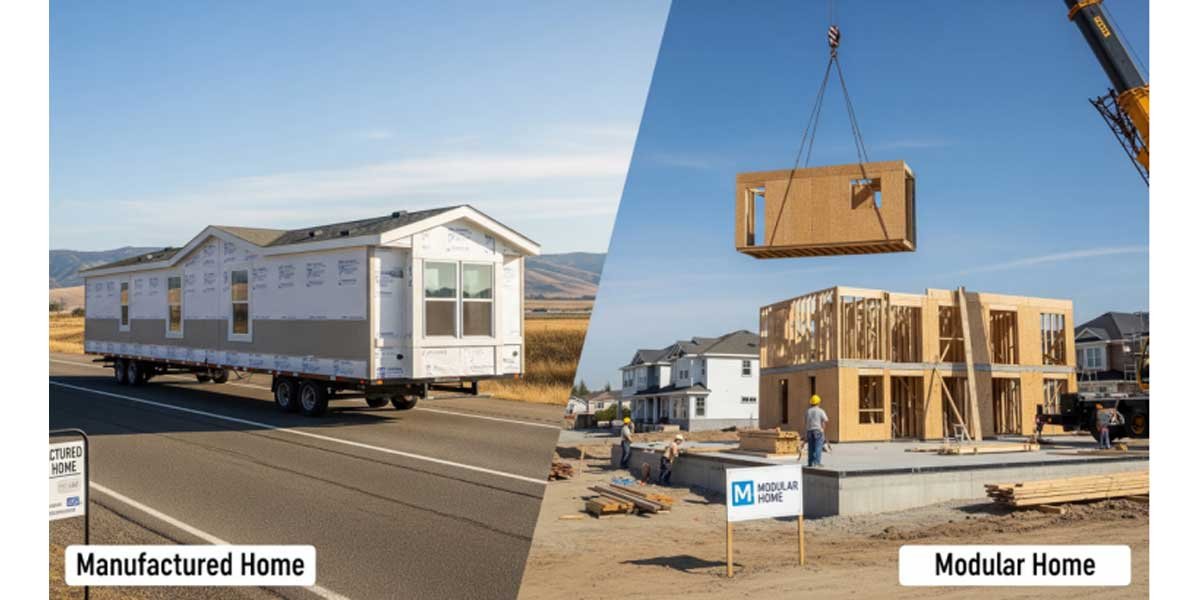
Here is why you are confused. You are mixing up two different things: Manufactured and Modular.
This isn’t semantics. It’s the difference between a car and a house.
- Manufactured Homes: These used to be called mobile homes. They are built on a steel chassis. They have wheels (at least for a while). They follow a federal code (HUD), not local building codes, points out Bartsch Management specialists. Banks often hate financing them. These do tend to depreciate, just like your Camry does as soon as you drive it off the lot.
- Modular Homes:These are built in a factory, yes. But they are put on a flatbed truck, driven to your lot, and craned onto a permanent concrete foundation. Once that crane leaves, the house is legally identical to a site-built home.
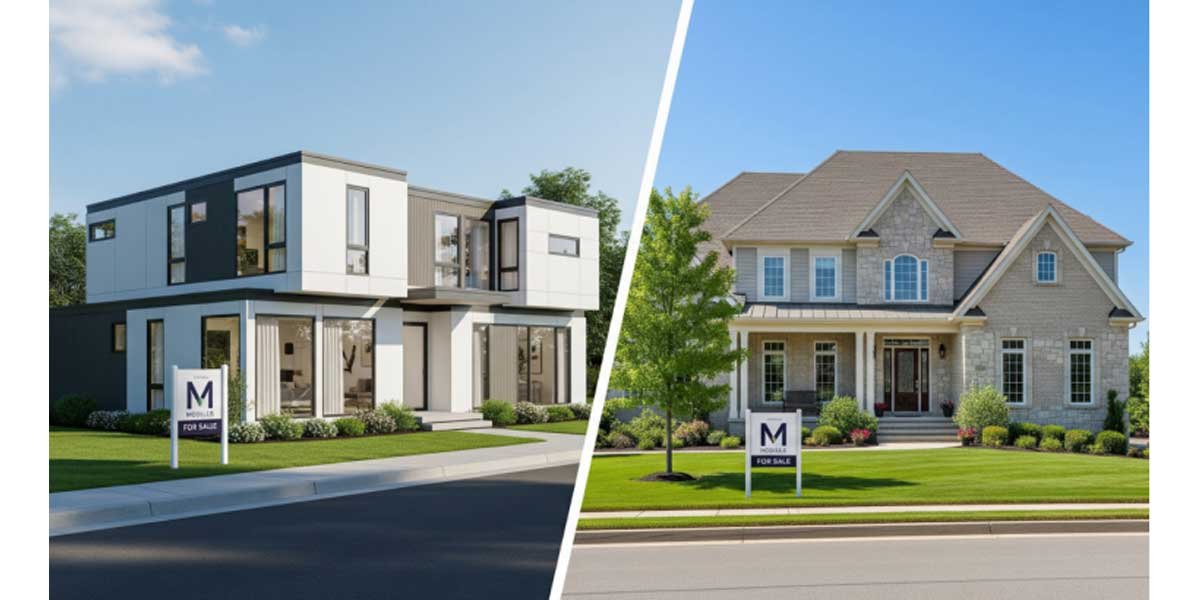
If you walk into a modular home and a traditional home, you cannot tell the difference. Neither can the tax assessor.
The Appraisal Reality
I deal with appraisers all the time. They are creatures of habit. They look at residential valuations based on data, not feelings.
When a bank orders an appraisal, they look for comparable sales in the neighborhood.
If I sell a modular colonial in a neighborhood of stick-built colonials, the appraiser doesn’t check a box that says “Discount for Factory Air.” They check the square footage. They check the finish quality. They check the foundation.
As long as the home is on a permanent foundation and owned with the land, the bank treats it as real property. Period.
In fact, the only time I see a valuation hit is when the builder gets lazy. If you build a boxy, ugly house that looks like a shipping container, it will appraise low. But that’s not because it’s modular. It’s because it’s ugly.
The Numbers Don’t Lie
Let’s talk about the actual cash.
Construction costs are skyrocketing. In some markets, building a custom stick-built home is pushing $350+ per square foot. It’s insane.
I’ve seen modular projects come in closer to $160–$200 per square foot for the total build.
Why? Because the factory doesn’t have rain delays. They don’t have subcontractors showing up hungover or stealing copper wire. They buy lumber in bulk.
Now, does this mean the resale value is lower? No.
Here is the kicker: If you spend $400,000 building a modular home that appraises for $500,000 because it matches the neighborhood comps, you just walked into $100,000 of instant equity. The market pays for the result, not the method.
The Resale Gamble
There is one catch. I’d be lying if I said there wasn’t.
Public perception is slow to change.
If you go to sell your modular home in five years, you might run into a buyer like my client from the intro. Someone who hears “modular” and thinks “mobile.”
This is where you have to be smart. You don’t list the house as “A Great Modular Home!” You list it as a “Custom 4-Bedroom Colonial.” Because that’s what it is.
When the inspection happens, the inspector will see the quality. Modular homes often have more lumber in the walls because they had to survive a highway drive at 60 mph. They are tanks.
The Verdict
Are prefab houses worth less?
Only if you build a bad one.
If you put a high-end modular on a cheap lot? You lose money.
If you put a cheap modular on a high-end lot? You lose money.
But that’s true for stick-built homes too.
The market doesn’t care how the sausage is made. It cares how it tastes. If the roof holds up, the heat works, and the kitchen looks like Pinterest, the value is there.
Don’t let a stigma from 1975 scare you out of a better profit margin in 2026.