

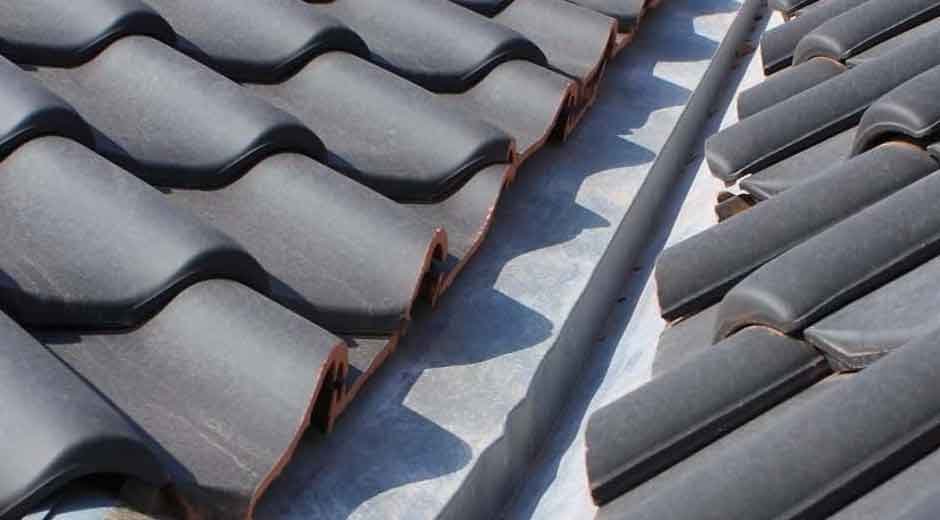
What Is the Valley of a Roof? Types, Installation, and Why It Is the Most Important Part
A roof valley is the internal angle where two downward-sloping roof planes meet — the V-shaped channel formed where a main roof section joins a dormer, where an L-shaped house creates an inside corner, or where a hip roof transitions between sections. From the ground, the valley is the diagonal line running from the ridge to the eave. From above, it is a trough that collects water from two roof planes and channels it toward the gutter.
Roof valleys carry more water than any other part of the roof. A single valley on a 2,000-square-foot roof handles roughly 500 to 800 gallons of water during a one-inch rainstorm — more than the rest of the roof surface combined on a per-square-foot basis. That hydraulic load is why valleys are the most common failure point on any roof, and why a roof that leaks at the ridge or in the middle of a field of shingles is rare, but a roof that leaks at a valley is almost a cliché.
Where to Find the Roof Valley on Your House
Stand in front of your house and look up at the roofline. Any diagonal line that cuts across the roof surface from a high point to a low point is a valley. It is easier to spot on a complex roof than a simple one.
Common valley locations:
- The junction between a main roof and a dormer. A dormer window on the second floor has its own small roof that ties into the main roof at a valley on each side. These are short valleys but disproportionately leak-prone because they collect water from the steep dormer roof and dump it onto the shallower main roof.
- The inside corner of an L-shaped or T-shaped house. Where two wings of the house meet at a right angle, the intersecting roof planes form a valley that runs from the ridge intersection down to the eave. This is typically the longest valley on the house.
- Where a garage roof ties into the main house. An attached garage with a separate roof plane creates a valley at the wall line.
- Where a porch roof meets the house wall. This is technically a valley, though it often functions more like a flashing detail than a true roof valley.
- On a hip roof with a cross-gable. A hip roof with a gable projection creates two valleys where the gable roof planes meet the hip roof planes.
If your house has none of these features and is a simple rectangle with a single gable roof, you do not have roof valleys. A simple gable roof has a ridge, two flat planes, and no internal angles. A hip roof with no projections also has no valleys — all four planes meet at hips (external angles), not valleys (internal angles).
The Three Types of Roof Valleys: Open, Closed, and Woven
Roof valleys are built in three fundamentally different ways. The choice affects how the roof looks, how long the valley lasts, and how it handles debris.
| Valley Type | Description | Best For | Lifespan | Appearance |
|---|---|---|---|---|
| Open Valley | Metal flashing visible between shingles; shingles cut back 3-6 inches from centerline | Asphalt shingle, heavy debris areas | 30-50 years | Two parallel shingle lines with metal channel visible |
| Closed Valley (Cut) | Shingles from one plane extend across valley; shingles from other plane cut along centerline | Asphalt shingle, dry climates | 15-25 years | Shingles cover the valley, no metal visible |
| Woven Valley | Shingles from both planes alternate across the valley, woven together like fingers | Three-tab shingles only, low-slope | 10-20 years | Continuous shingle pattern across valley |
The open valley is the industry standard for most modern asphalt shingle roofs. A W-shaped metal valley flashing — typically 24-gauge galvanized steel, aluminum, or copper — runs the full length of the valley from ridge to eave. The shingles on each roof plane are cut back 3 to 6 inches from the valley centerline, leaving the metal channel exposed. Water runs down the metal, not over the shingle edges, and debris washes straight through rather than accumulating in the crease.
The closed cut valley is the traditional method and is still common in dry climates where debris accumulation is less of a problem. Shingles from one roof plane extend across the valley by 12 to 18 inches. Shingles from the other plane are cut along the valley centerline and sealed with roofing cement. No metal is visible from the ground. The sealant strip at the cut edge is the failure point — UV exposure degrades the roofing cement over 15 to 20 years, and water eventually works under the cut shingle edge.
The woven valley is the oldest method and is generally considered obsolete for anything other than three-tab shingles. Shingles from both roof planes are woven together across the valley. The valley has no distinct centerline — shingles alternate from each side. Woven valleys do not shed debris well and are prone to ice damming in cold climates. Most manufacturers no longer recommend woven valleys for architectural shingles, which are too thick to weave cleanly.
Valley Flashing Materials: What Goes Under the Shingles
The metal flashing in an open valley does the actual work of waterproofing. The shingles above it are cosmetic — they protect the metal from UV exposure and mechanical damage, but the metal is what keeps the water out.
| Flashing Material | Typical Lifespan | Cost per Linear Foot | Best For |
|---|---|---|---|
| Galvanized Steel (28-gauge) | 20-30 years | $3-$6 | Budget installations, dry climates |
| Galvalume Steel (24-gauge) | 30-50 years | $5-$10 | Standard asphalt shingle roofs |
| Aluminum (0.032 inch) | 30-50 years | $6-$12 | Coastal homes, asphalt shingles |
| Copper (16-20 oz) | 50-100 years | $12-$25 | Slate, tile, copper, historic roofs |
| Lead-Coated Copper | 70-100 years | $15-$30 | Premium slate and tile roofs |
| Ice & Water Shield Only (peel-and-stick) | 10-20 years alone | $3-$5 | Temporary or secondary waterproofing only |
Under every metal valley flashing, there should be a layer of ice and water shield — a self-adhering rubberized asphalt membrane that seals around roofing nails. The ice and water shield is the backup waterproofing layer. If the metal flashing corrodes through or a seam opens, the ice and water shield underneath prevents the leak from reaching the roof deck. Building codes in most U.S. jurisdictions require ice and water shield in valleys regardless of climate zone.
Why Roof Valleys Leak: The Most Common Failure Points
Roof valleys leak more often than any other roof component because they concentrate water, debris, and thermal stress in a single linear channel. The specific failure modes are predictable.
Debris accumulation and standing water. Leaves, pine needles, and shingle granules collect in the valley crease. The debris holds moisture against the metal flashing or the shingle edges for days after a rain. Over time, the trapped moisture corrodes the metal or degrades the sealant at the cut shingle edge. Open valleys resist this because the metal channel is smooth and debris tends to wash through. Closed and woven valleys trap debris in the crease.
Ice damming in the valley. Snow melts on the warm roof surface above the valley, water runs down to the colder metal flashing at the valley bottom, and refreezes. The ice builds up and forces subsequent meltwater under the shingles and up under the flashing. Ice and water shield underneath the valley is the defense against this failure mode, which is why building codes require it.
Mechanical damage from foot traffic. A roofer or a chimney sweep walking in the valley dents the metal flashing and creases the shingle edges. The dent becomes a puddle point. The crease becomes a crack. Valleys are the natural walking path when moving across a roof, which is ironic because they are the one part of the roof you should never step on.
Corrosion at the valley seams. Metal valley flashing comes in 10-foot sections. Where two sections overlap, water flowing downhill can work its way between the layers if the overlap is facing the wrong direction (uphill instead of downhill) or if the seam was not properly sealed. The upper section must always overlap the lower section — shingle-style, with the water flowing over the joint, not into it.
FAQ: Common Questions About Roof Valleys
Which is better: open valley or closed valley?
Open valley, in almost every situation. It lasts 10 to 15 years longer than a closed valley, it sheds debris more effectively, and it is easier to repair if a problem does develop. The only reason to choose a closed valley is aesthetics — some homeowners prefer the look of shingles covering the entire roof face with no visible metal. That preference costs roughly 10 years of valley service life.
How much does it cost to repair a leaking roof valley?
$400 to $1,200 for a typical valley leak repair. The roofer removes the shingles along the valley on both sides, inspects the flashing and ice and water shield underneath, replaces the damaged section, and re-installs the shingles. If the decking underneath is rotted from a long-term leak, the cost increases to $800 to $2,000 because the roofer must cut out and replace the damaged plywood or OSB before re-flashing the valley.
Do metal roofs have valleys?
Yes. A metal roof valley uses a metal valley liner — typically the same material and finish as the roof panels — with the roof panels cut to leave a 4 to 6 inch gap at the valley centerline. The valley liner extends under the roof panels on both sides. Metal roof valleys are almost always open valleys because metal panels cannot be woven or closed-cut the way asphalt shingles can.
What is the difference between a roof valley and a roof ridge?
A ridge is the external angle where two roof planes meet at the top — it is a peak that sheds water away from itself. A valley is the internal angle where two roof planes meet — it is a trough that collects water toward itself. A ridge vents hot air out of the attic. A valley channels rainwater out of the roof. They are opposite structures doing opposite jobs.
The Roof Valley Is the Hardest-Working Part of the Roof
A roof valley looks like a simple diagonal line from the ground. It is actually a precisely engineered waterproof channel that handles hundreds of gallons of water per storm, resists ice damming and debris accumulation, and outlasts the shingles around it when it is built correctly.
When you replace a roof, ask the contractor what type of valley they install and what material the flashing is made of. An open valley with 24-gauge Galvalume metal over ice and water shield is the correct answer for an asphalt shingle roof. If the answer is a closed cut valley with no metal flashing, you are paying for a roof that will leak at the valleys 10 years before the shingles wear out anywhere else.