

How Long Does a Standing Seam Metal Roof Last? Lifespan by Metal, Coating, and Seam Type
A standing seam metal roof lasts 40 to 70 years for steel, 40 to 50 years for aluminum, and 70 to 100-plus years for copper and zinc. These are not warranties — they are the observed service lives of standing seam roofs installed in the last 40 to 50 years. The oldest standing seam steel roofs, installed in the early 1980s with early-generation PVDF paint systems, are now reaching year 40 and still performing. The roofs that have failed were not defeated by rust or paint degradation — they were defeated by installation errors, usually at the seams or at the flashings.
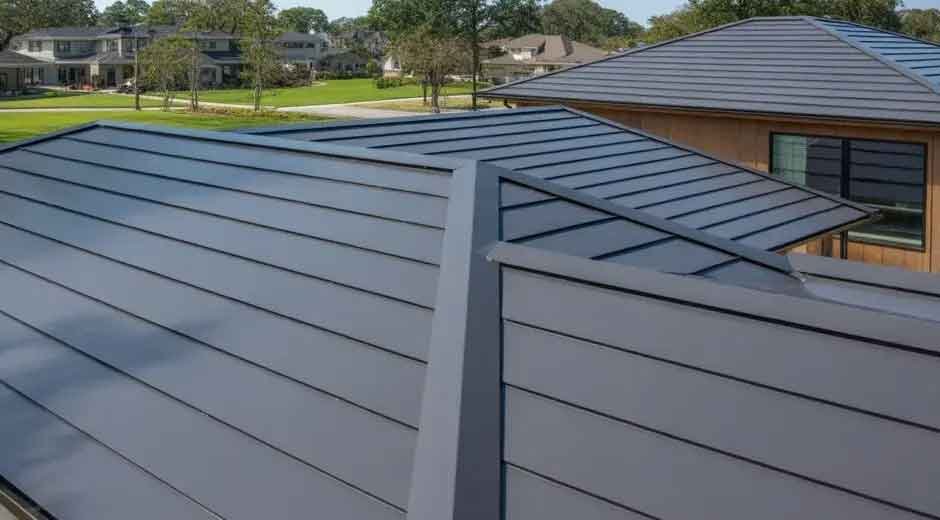
The standing seam roof is fundamentally different from the exposed-fastener metal roofs (corrugated, R-panel, 5V-crimp) that give metal roofing its reputation for being an agricultural or budget product. An exposed-fastener roof leaks when the neoprene washers under the screw heads crack after 10 to 15 years of UV exposure. A standing seam roof has no exposed fasteners. The panels are attached to the roof deck with hidden clips, and the seams are either snapped together (snap-lock) or mechanically folded (mechanical seam). No fastener penetrates the weather surface of the panel. This single design difference — the hidden clip — accounts for roughly 20 to 30 years of the lifespan gap between exposed-fastener metal roofs and standing seam metal roofs.
Standing Seam Lifespan by Metal Type
| Metal | Typical Lifespan | Installed Cost / sq ft | Corrosion Resistance | Best Climate |
|---|---|---|---|---|
| Galvalume Steel (24-gauge) | 40-60 years | $9-$14 | Good (aluminum-zinc coating) | All except coastal salt spray |
| Aluminum (0.032 inch) | 40-50+ years | $12-$18 | Excellent (salt-resistant) | Coastal, salt air |
| Copper (16-20 oz) | 70-100+ years | $20-$35 | Self-healing patina | All climates, historic |
| Zinc | 80-100+ years | $18-$28 | Self-healing patina | All climates, low-slope |
| Stainless Steel (Terne-coated) | 60-100+ years | $22-$38 | Maximum | Industrial, extreme coastal |
Galvalume steel is the dominant standing seam material in North America for residential roofs. The steel substrate is coated with an aluminum-zinc alloy (AZ50, meaning 0.50 ounces of coating per square foot) that provides sacrificial corrosion protection. The panel is then factory-painted with a PVDF (Kynar 500) paint system in the customer’s chosen color. The paint protects the Galvalume. The Galvalume protects the steel. The steel provides the structural strength. Each layer has a different lifespan, and the system lasts only as long as the layer that fails first.
Copper and zinc are premium metals that do not rely on a factory-applied coating system. The metal itself develops a protective patina — copper turns green over decades, zinc turns a matte blue-gray — that is self-healing. A scratch on a copper roof will re-patinate and seal itself over the course of a year or two. This is the fundamental reason copper and zinc standing seam roofs have lifespans measured in centuries rather than decades.
The Paint System: What Determines When a Steel Roof Looks Old
A steel standing seam roof has two distinct lifespans: the functional lifespan (it still sheds water) and the aesthetic lifespan (it still looks good). The paint system determines the aesthetic lifespan. The metal substrate determines the functional lifespan.
| Paint System | Color Fade Warranty | Chalk/Film Integrity | Cost Premium |
|---|---|---|---|
| Polyester (SMP) | 10-20 years | 25-30 years | Baseline |
| PVDF (Kynar 500 / Hylar 5000) | 30-40 years | 35-50 years | +15-25% |
| Premium PVDF (70% resin) | 35-45 years | 40-60 years | +20-30% |
The industry standard for fade is 5 Hunter units of color change — the point at which the average person can see a difference between the original color and the weathered color. A PVDF-coated steel roof in a moderate climate reaches 5 Hunter units in roughly 30 to 35 years. An SMP-coated roof in a sunny climate reaches that threshold in 10 to 12 years. The roof still sheds water perfectly — the paint is cosmetic, not waterproof — but it looks chalky and faded. The PVDF premium is buying 20 additional years of appearance, not 20 additional years of function.
PVDF chemistry: The fluorine-carbon bond in Kynar 500 is one of the strongest single bonds in organic chemistry — roughly 130 kcal/mol, compared to 85 kcal/mol for a carbon-carbon bond. It is that bond strength that makes PVDF paint resist UV degradation for decades. No other common architectural coating approaches the same longevity. If a metal roof salesperson says a product is “PVDF” or “Kynar,” ask what percentage of the resin is PVDF. Standard Kynar 500 is 50% to 70% PVDF resin. Premium systems are 70%. Economy systems use less than 50%. The percentage determines the lifespan.
Snap-Lock vs. Mechanical Seam: How the Seam Affects Lifespan
Standing seam panels come in two seam types, and the difference in lifespan between the two is roughly 10 to 20 years. The seam is the Achilles’ heel of every standing seam roof, and the type of seam determines whether that heel ever bleeds.
Snap-lock seams rely on the spring tension of the formed metal to hold the panels together. One panel edge has a male profile. The adjacent panel has a female profile. The two are snapped together by hand or with a rubber mallet during installation. The seam is held closed by the interlocking shape of the metal and a factory-applied sealant bead in the seam channel. Snap-lock is faster to install (lower labor cost) and can be removed and replaced if a panel is damaged. The downside: thermal expansion and contraction — steel moves roughly 1/16 inch per 10 feet per 100°F — can, over decades, fatigue the spring tension and unseat the snap-lock. A snap-lock seam that leaks at year 35 is not a material failure — it is a design limitation.
Mechanical seams are formed on-site with a seaming machine that folds the two panel edges together into a watertight, mechanically locked joint. The seam cannot separate without being physically unfolded by the same machine running in reverse. A mechanical seam is stronger than the panel itself — the metal tears before the seam opens. Mechanical-seam roofs cost $2 to $4 more per square foot installed than snap-lock because of the additional labor and the specialized seaming equipment. They are standard on commercial roofs and on residential roofs in high-wind zones (coastal Florida, hurricane country) where a snap-lock seam could be peeled open by wind uplift. A mechanical-seam roof will reliably reach 60 to 70 years without a seam leak. A snap-lock roof will reach 40 to 50 years under the same conditions.
Standing Seam vs. Other Metal Roof Types: Why the Seam Matters
| Metal Roof Type | Fastener Exposure | Typical Lifespan | Leak Risk |
|---|---|---|---|
| Standing Seam (Mechanical) | None (hidden clips) | 50-70+ years | Very low |
| Standing Seam (Snap-Lock) | None (hidden clips) | 40-60 years | Low |
| Exposed Fastener (R-Panel, Corrugated) | Thousands of screws with neoprene washers | 20-35 years | High (washer failure) |
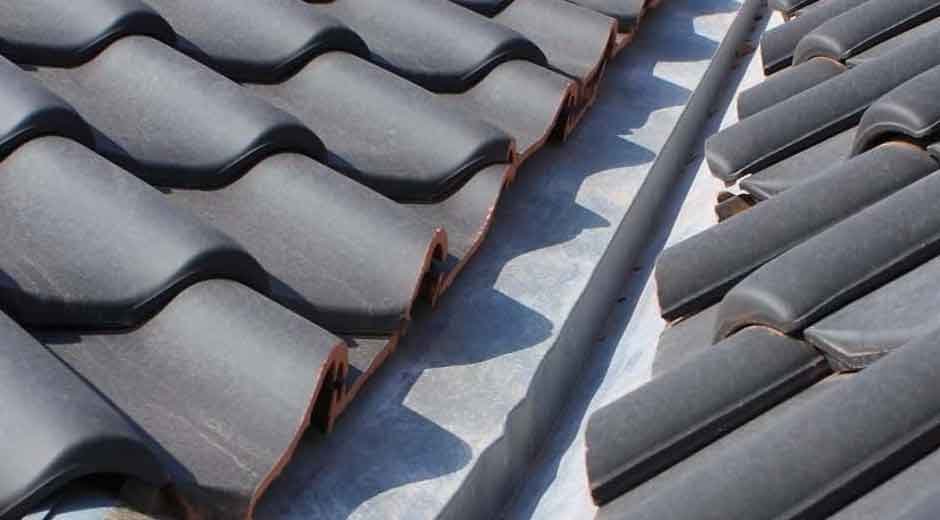
| Metal Shingle / Tile | Hidden or interlocking | 30-50 years | Low-moderate |
The exposed-fastener metal roof — the type with visible screw heads running in rows — is not a standing seam product, and it does not last as long. The washers under the screws degrade from UV exposure and thermal cycling, the screws back out as the panels expand and contract, and water seeps down the screw shafts into the roof deck. Replacing washers and re-tightening screws at year 12 to 15 is standard maintenance on an exposed-fastener roof. Replacing washers on a standing seam roof is impossible because there are no exposed screws to service. The standing seam roof costs more to install because the hidden-clip system is more labor-intensive, and that additional labor buys 20 to 30 years of additional service life without a single fastener-related leak.
Standing Seam Roof Maintenance: Almost None Required
A standing seam metal roof is the lowest-maintenance pitched roofing material available. It does not require cleaning, coating, or re-sealing. The maintenance tasks that do apply are infrequent and simple:
- Inspect penetrations and flashings every 5 years. The pipe boots, vent flashings, and wall-to-roof transitions use sealant that degrades faster than the metal panels. Re-sealing a flashing joint costs $100 to $300 and prevents a leak that would otherwise develop at year 20 to 25.
- Clear debris from valleys and behind chimneys every 2 to 3 years. Wet leaves against a metal panel edge create localized corrosion cells. A leaf blower from a ladder takes 15 minutes.
- Inspect seam sealant on snap-lock roofs every 10 years. The factory sealant bead in the snap-lock channel eventually loses adhesion. A roofing contractor can inject new sealant into an open seam without removing the panels. Mechanical seams do not require this inspection.
- Touch up scratches within 30 days with manufacturer-approved paint. A scratch through the paint to bare metal — from a fallen branch, a ladder, or foot traffic — will begin rusting within weeks. The touch-up paint is not cosmetic. It is functional corrosion protection.
FAQ: Common Questions About Standing Seam Roofs
Does the warranty match the actual lifespan?
The paint warranty on a PVDF standing seam roof covers fading and chalking to 5 Hunter units — typically 30 to 40 years. The substrate warranty covers perforation due to corrosion — typically 25 to 50 years for Galvalume steel, depending on the manufacturer. Neither warranty covers installation defects, which are the most common cause of premature standing seam roof failure. The warranty protects against manufacturing defects, which are rare. The installation quality protects against leaks, which are not rare on poorly installed roofs.
Can you install standing seam over existing shingles?
Yes, in most jurisdictions, standing seam can be installed over a single layer of asphalt shingles using furring strips screwed through the shingles into the roof deck. The shingles act as a secondary underlayment. However, the trapped heat between the shingles and the metal panels accelerates degradation of the paint system on the underside of the metal — a surface that was never designed for sustained high temperatures. A roof installed over shingles will have a 5- to 10-year shorter paint life than one installed over new underlayment on a bare deck. A full tear-off is recommended for maximum lifespan.
A Standing Seam Roof Should Outlast Your Ownership of the House
Forty to seventy years is the range for a properly installed Galvalume steel standing seam roof with a PVDF paint system. The hidden fasteners eliminate the failure mode that kills exposed-fastener metal roofs at year 20. The mechanical seam — an extra $2 to $4 per square foot at installation — eliminates the failure mode that can cause snap-lock seams to open at year 40. The PVDF paint will fade, slowly, over 35 years, but the roof underneath will still shed water.
If you are buying a standing seam roof, pay for the mechanical seam and the PVDF paint. The premium over snap-lock and SMP paint is roughly $4 to $7 per square foot installed — about $8,000 to $14,000 on a typical house. Over 60 years, that premium works out to $130 to $230 per year. For a roof you only have to buy once in your lifetime, it is the cheapest upgrade you will ever make.