

What Is an Upflow Furnace? The Basement Standard Explained
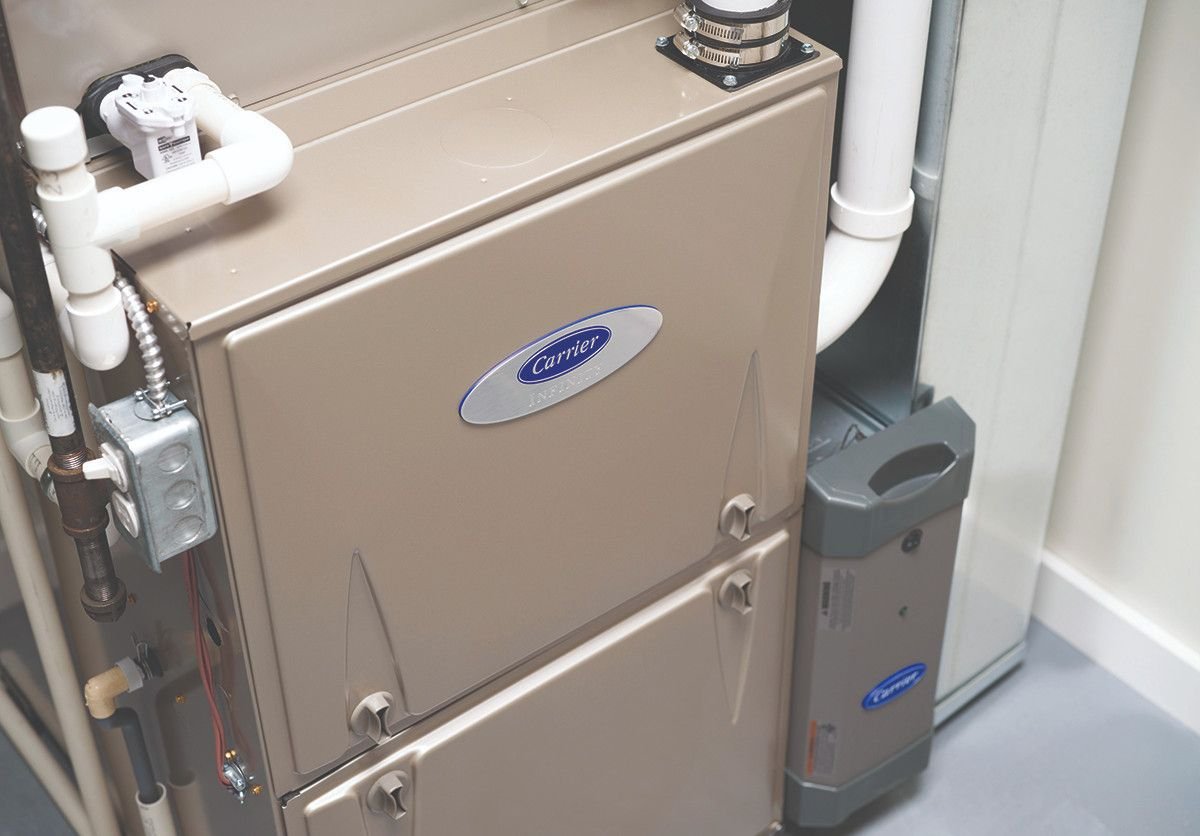
An upflow furnace is a furnace that moves air from bottom to top. Return air enters the bottom of the furnace cabinet, passes through the filter, is pulled upward through the blower, pushed across the heat exchanger, and exits as heated supply air through the top. The airflow direction works with natural convection — cold air sinks to the return near the floor, and warm air rises into the supply ducts above the furnace. The furnace does not fight gravity. Gravity assists it.
The upflow furnace is the most common furnace configuration in the United States because basements are the most common furnace location. In a basement installation, the return duct draws cold air from the floor level of the living space above, the furnace heats it, and the supply ductwork rises through the floors to deliver warm air to each room. The furnace sits at the lowest point of the thermal envelope, which is the ideal location for a heating appliance — the warm air naturally rises through the house, and the cold air naturally falls back to the return.
The Upflow Air Path: Bottom to Top
| Stage | Location in Cabinet | What Happens |
| 1. Return air enters | Bottom of furnace | Cold return air from house enters through base, side, or bottom return opening |
| 2. Air passes through filter | Bottom or side, at return opening | Filter removes airborne particles before air reaches blower |
| 3. Blower pulls air upward | Lower third of cabinet | Blower fan pulls return air in and pushes it upward |
| 4. Air crosses heat exchanger | Upper third of cabinet | Air flows over hot heat exchanger tubes, temperature rises 35-65°F |
| 5. Heated air exits | Top of furnace | Supply plenum distributes heated air into ductwork |
Why the Basement Is the Ideal Location for a Furnace
The basement is the best place in a house to install a furnace, and the upflow configuration is the reason. The basement is at the bottom of the thermal envelope. Heat naturally rises from the furnace through the ductwork and into the living space above. The return air naturally falls from the upper floors back to the basement return. The furnace does not need to overcome natural convection — it works with it.
A basement installation also provides easy access for maintenance and filter changes. The furnace is in a utility room with a concrete floor, adequate clearance, and no ladder required. Compare this to an attic installation — accessed through a ceiling hatch, with a plywood walkway over ceiling joists, in a space that is 130°F in summer. The basement furnace receives more frequent filter changes and maintenance simply because it is easier to reach. A furnace that is easy to maintain gets maintained. A furnace that is difficult to maintain gets neglected.
Condensate Drainage in an Upflow Condensing Furnace
In an upflow condensing furnace, the secondary heat exchanger is in the upper portion of the cabinet, above the blower. The condensate drains from the secondary heat exchanger downward through an internal trap to a drain line that exits the furnace near the floor. Because the furnace is in a basement, the drain line can run directly to a nearby floor drain by gravity — no condensate pump required. This is a significant advantage of the upflow basement installation: the condensate drain is simpler, gravity-fed, and has no moving parts to fail.
In a downflow attic installation, the condensate must be collected and pumped — either by gravity if the drain can slope downward from the attic, which is rarely possible, or by a condensate pump that lifts the water to a drain line. The gravity-fed basement condensate drain eliminates the condensate pump as a failure point. No pump to fail, no pump to replace, no water backup when the pump quits.
Filter Location in an Upflow Furnace
In an upflow furnace, the filter is located at the bottom of the furnace — either in a filter slot at the base of the cabinet, in a filter rack attached to the side where the return duct enters, or in a filter grille in the return air opening. The filter is always on the return side of the blower because the blower must be protected from dust and debris. If the filter is at the bottom of the furnace — a slide-in slot at the base of the cabinet — it can be changed by sliding it out, swapping in a new filter, and sliding it back in. This is a 30-second operation that requires no tools.
If the furnace uses a filter grille in the ceiling or wall of the living space — a common configuration in homes with a single central return — the filter is changed from inside the living space without entering the basement. The contractor or the homeowner should label which type of filter the system uses and where it is located. A furnace with two filters — one at the furnace and one at the return grille — has an airflow problem. One filter is sufficient. Two filters double the static pressure and reduce airflow.
How to Identify an Upflow Furnace
Look at the ductwork. The return duct — the larger duct carrying air back to the furnace, typically the one with the filter — connects to the bottom or the lower side of the furnace. The supply duct exits the top and runs up toward the ceiling or into the floor joists above. If the furnace is in the basement and the ductwork runs upward, it is an upflow furnace. If the filter is at the bottom of the furnace cabinet, it is an upflow furnace. If the furnace is in a first-floor closet with the return near the floor and the supply exiting through the top into the attic or the second floor, it is an upflow furnace.
Upflow with a side return: Many upflow furnaces use a side return — the return duct enters the side of the furnace near the bottom, and the air turns 90 degrees upward through the blower and heat exchanger. This is still an upflow furnace because the air path through the cabinet is upward. The return duct enters from the side for space reasons — there is not enough room below the furnace for a bottom return. The airflow direction inside the furnace is what defines it, not the direction the duct enters the cabinet.
FAQ: Common Questions About Upflow Furnaces
Can an upflow furnace be installed in an attic?
No — an upflow furnace cannot be installed in an attic because the hot air exits the top of the furnace. In an attic, the ducts run down through the ceiling to the rooms below. An upflow furnace would send hot air upward into the attic ridge and cold air downward through the ducts — the opposite of what you want. An attic installation requires a downflow or horizontal furnace that sends heated air downward through the ceiling ducts.
Where is the filter on an upflow furnace?
At the bottom of the furnace — look for a slot at the base of the front panel, a filter rack on the side where the return duct connects, or a filter grille in the return air opening in the living space. If you cannot find the filter, trace the return duct backward from the furnace. The filter is somewhere in the return air path between the living space and the furnace. Every furnace has at least one filter. A furnace that has been running without a filter for an extended period has a dirty blower wheel and a dirty evaporator coil — both require professional cleaning.
The Upflow Furnace Is the Standard Because the Basement Is the Best Place for a Furnace
An upflow furnace moves air from bottom to top — return air enters the bottom, heated supply air exits the top. It is the most common furnace configuration in the United States because basements are the most common furnace location, and the upflow air path works with natural convection. The basement installation provides easy maintenance access and gravity-fed condensate drainage that eliminates the condensate pump as a failure point.
If you have a basement and are replacing a furnace, the replacement will almost certainly be an upflow furnace in the same location. The ductwork is already configured for bottom-to-top airflow. Converting to a different orientation would require rebuilding the duct connections — a cost that buys no improvement in furnace efficiency or performance.